Real Weddings
21 South Asian Fusion Weddings Worth Saving
Traditional ceremony, modern reception. Couples who refused to choose between heritage and personal aesthetic.
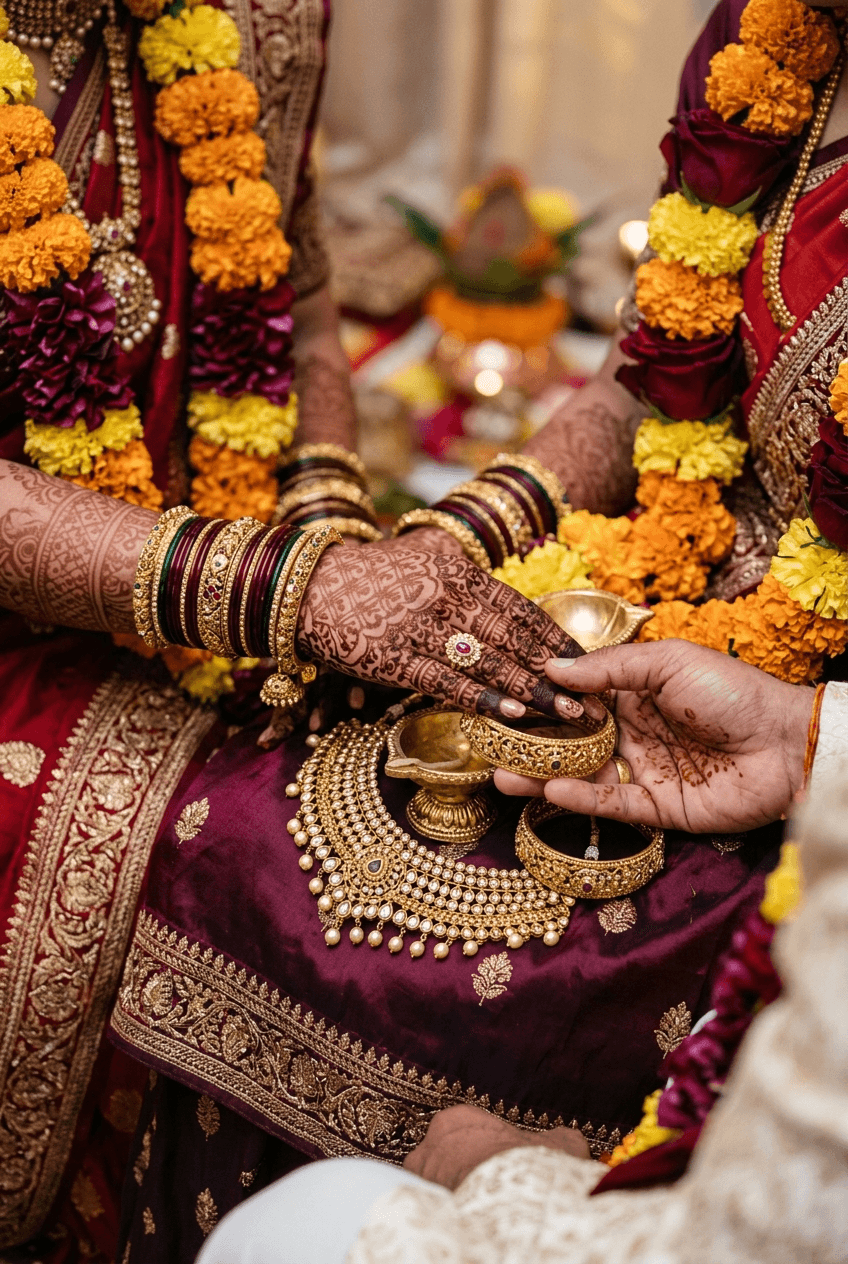
South Asian fusion weddings have become the most photographically rich category in the U.S. wedding industry, and the big sites still stuff them into a sidebar called "diverse weddings." The couples saving these are not looking for fusion as compromise. They're looking for fusion as upgrade.
What "fusion" actually means in 2026
Fusion weddings used to mean a Western ceremony followed by a watered-down Indian reception. The 2026 version is the opposite: full traditional ceremony, full pheras, full mehndi night, and a reception that adds American or European elements (jazz band, plated dinner, formal speeches) without subtracting anything from the traditional days. The aesthetic move: refuse to pick.
Most couples we feature in this category have at least three days of events: mehndi, sangeet (often combined), the wedding day proper, and the reception. The reception is where Western fusion lives. The earlier days are uncompromised tradition. This sequencing matters because it lets the bride, groom, and their families honor lineage without flattening it.
The aesthetic at scale: marigold, gold, deep red
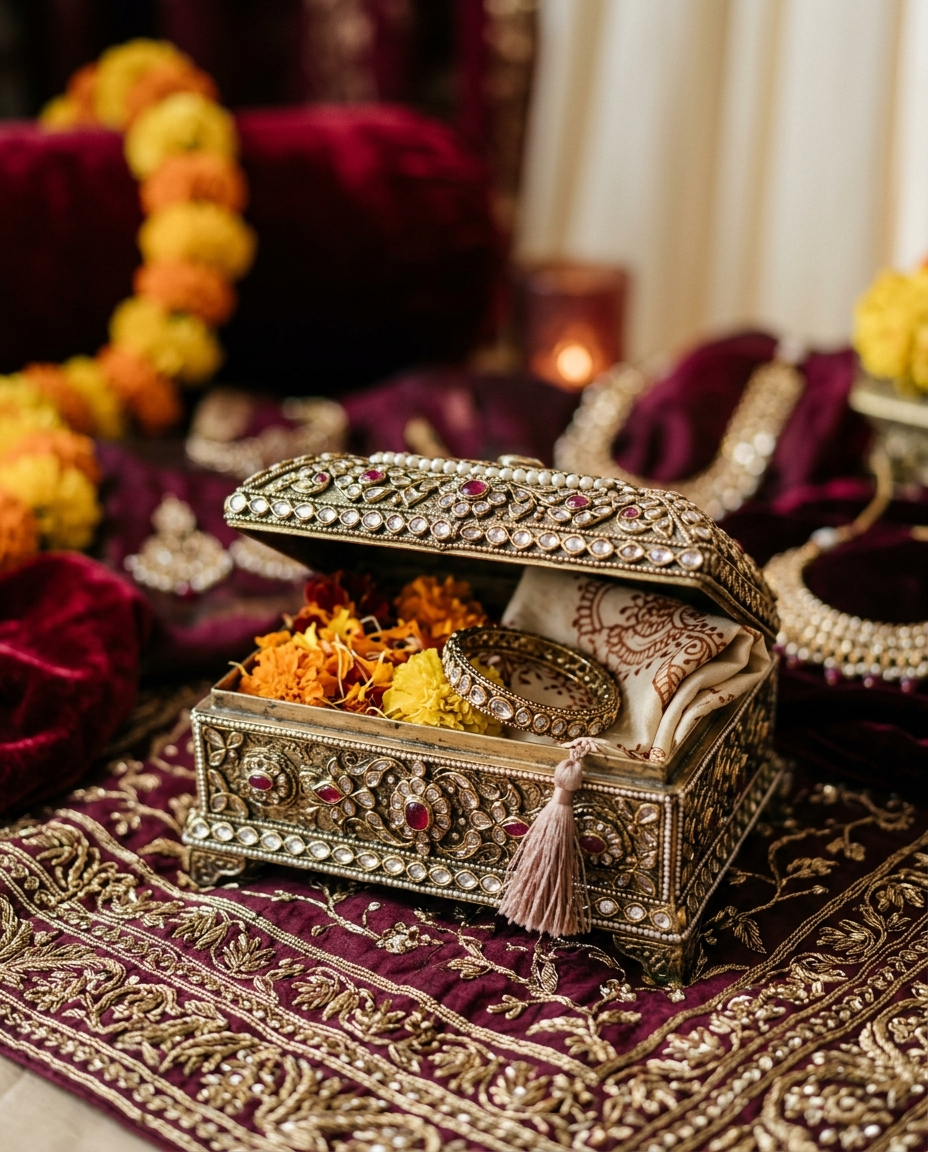
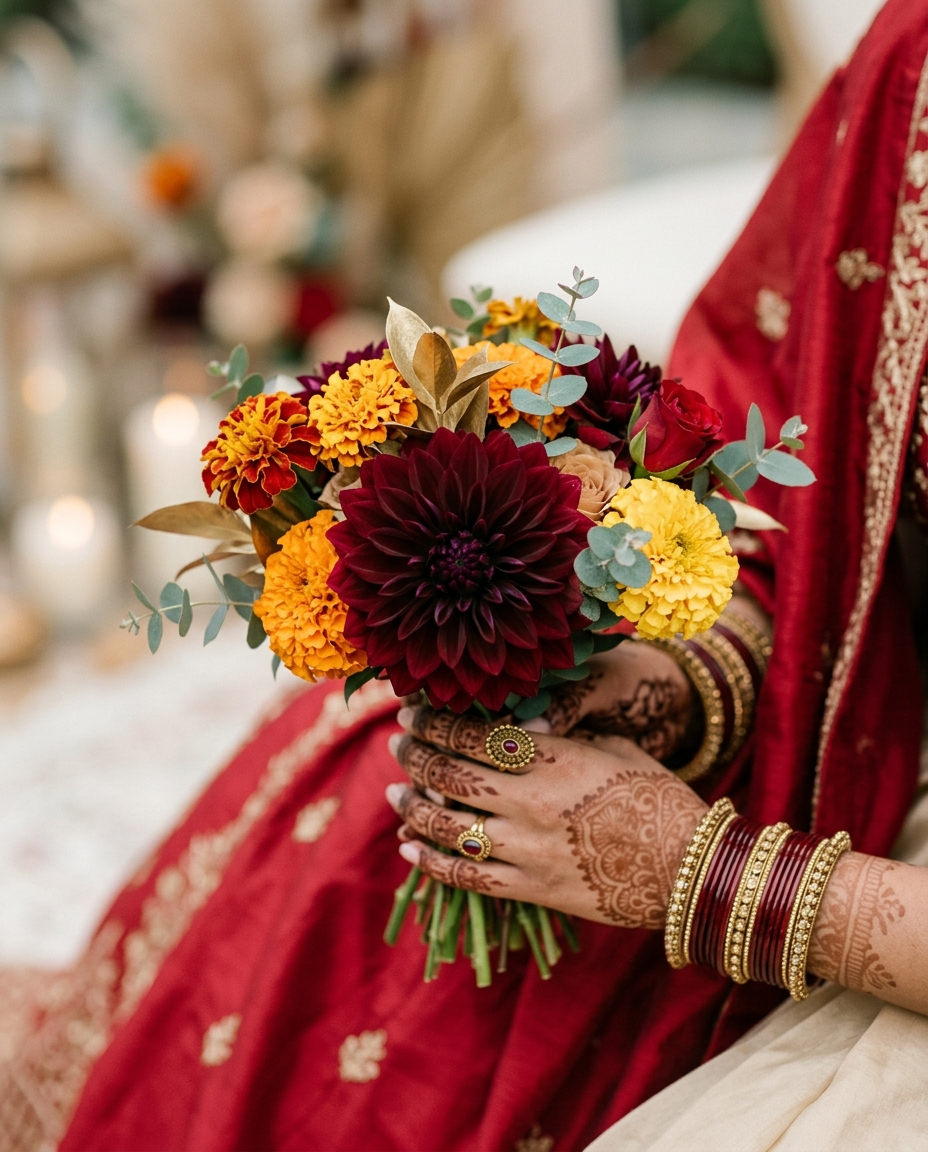
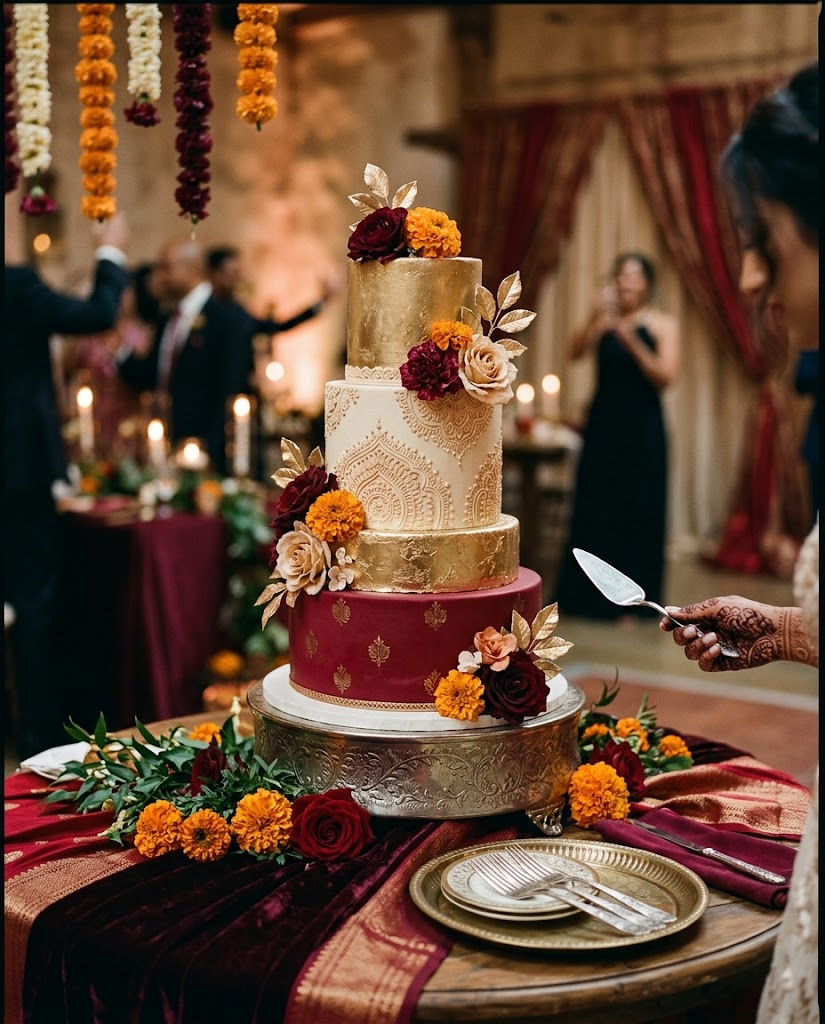
The South Asian wedding palette has barely shifted in 50 years for a reason: it works. Deep red, marigold orange-yellow, gold metallic, and rich cream. What's modernized is the application. Where 1990s fusion weddings used these colors as block-color saturation (red wall, gold tablecloth), 2026 fusion uses them as layered texture: red velvet draped against gold-embroidered cream linen, marigold strung as garlands rather than scattered, deep red florals against ivory base palettes.
The mistake we still see is over-saturation. A red mandap with a red runner with red bridesmaid lehengas with red florals reads visually flat in photographs. The strongest fusion weddings let one element hold the saturation (often the bride's lehenga and the mandap florals) and let the rest play counterpoint in cream, gold, and ivory.
- Mandap florals: marigold, rose, jasmine, with greenery as the structural balance
- Reception florals: shift palette to cream and deep red, less marigold
- Sangeet decor: bright, layered, more permission to go saturated
- Wedding-day attire: red and gold for bride; sherwani in cream or deep jewel tone
- Reception attire: white or pale palette gown for bride; modern tux or sherwani for groom
"The 2026 version of fusion isn't watered-down anything. It's full tradition plus, never tradition minus."
Mehndi night: the underrated event
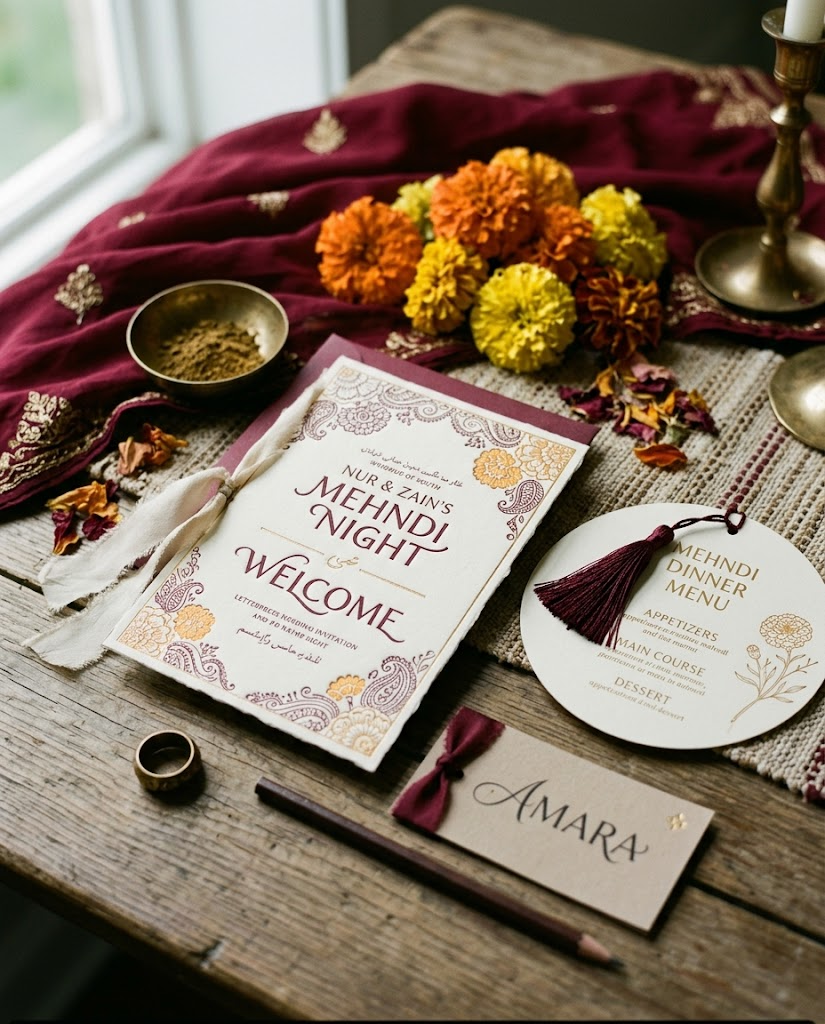
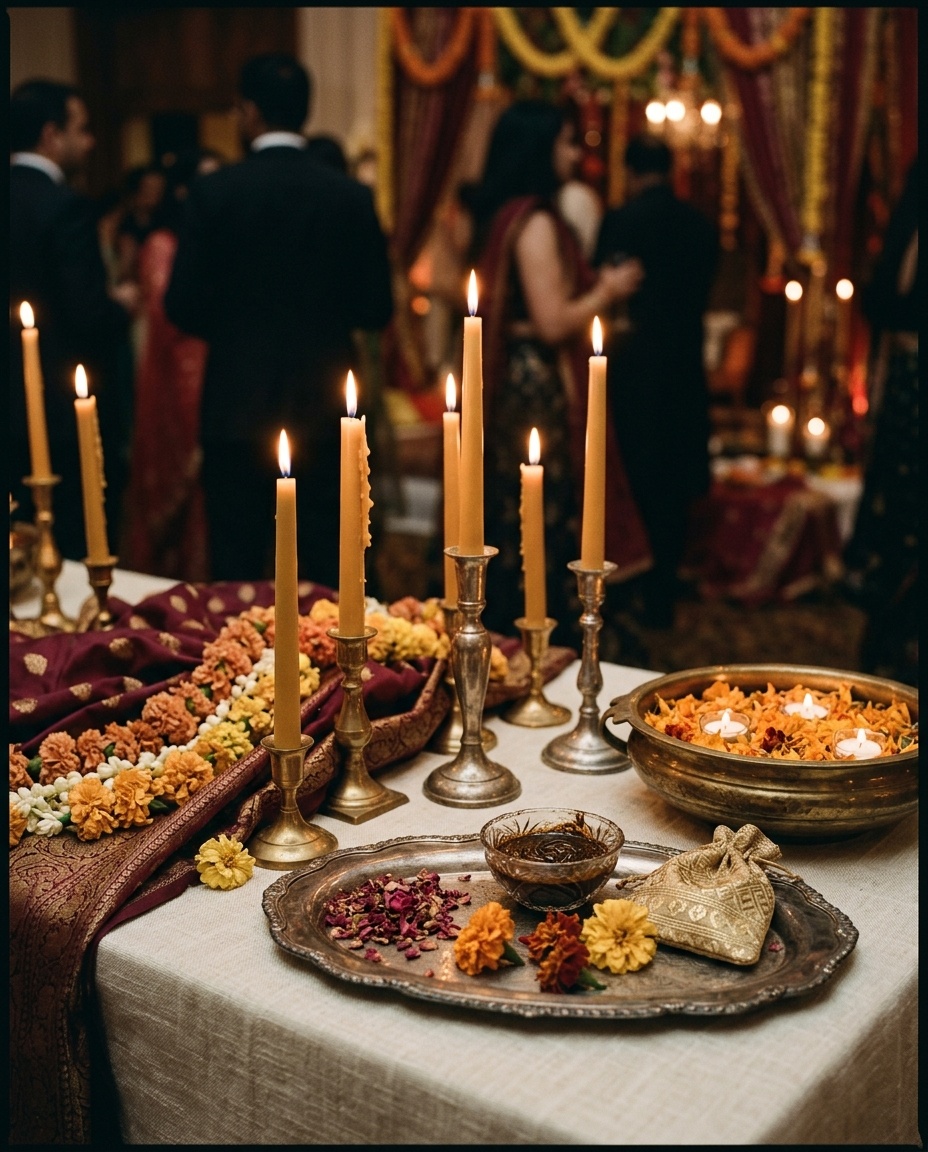
Mehndi has gotten the most aesthetic attention from non-South-Asian wedding couples and is often the most photogenic event of the wedding sequence. The night uses different palette signals: yellow and orange dominate, marigold strung as decor, intricate hand henna being applied while everyone eats. The traditional events are a sit-down with the bride at center, plus a more casual evening sangeet (music, dancing, performances) for everyone.
What's changed since 2020: mehndi nights have become more photo-driven. The setup is now often a styled tent with structured floral installations, a long head table for the bride and her closest family, and a photographer covering the henna application as a portrait session. This is appropriate and gorgeous, but planners should set guest expectations: the mehndi night still runs late, food is served buffet-style, and the formality is intentionally lower than the wedding day.
The wedding day: pheras and what surrounds them
The pheras (the seven sacred circles around the fire) are the central religious moment and the structural anchor for everything that surrounds them. The mandap design, the seating, the priest selection, the music timing all flow from the pheras. The most-saved fusion weddings keep this part fully traditional.
What modern couples often add: a written program in English explaining each ritual to non-South-Asian guests, hand-fan favors at outdoor ceremonies, a brief cocktail reception between the ceremony and reception (Western convention) that gives the bride time to change into the reception outfit. Each of these adds to the day without subtracting from tradition.
The reception: where fusion actually happens
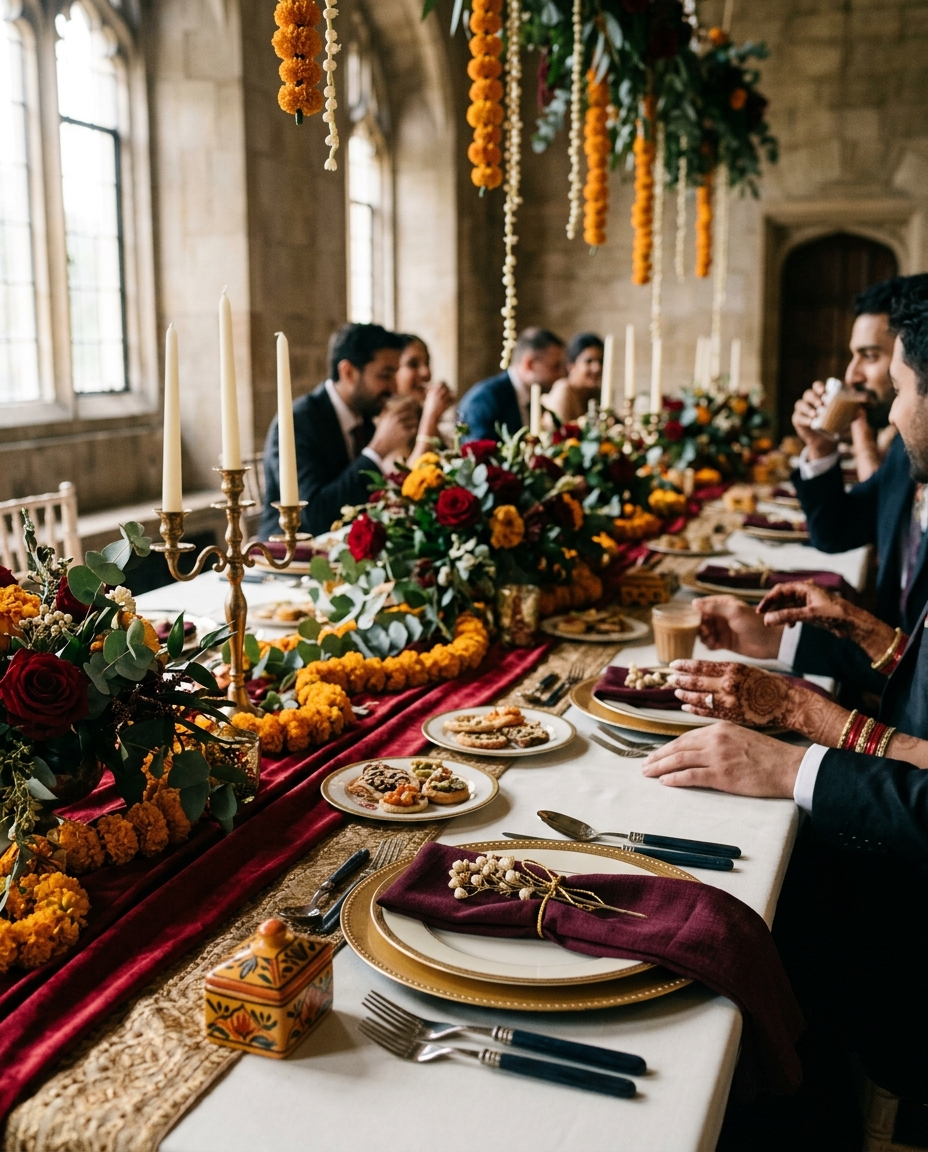
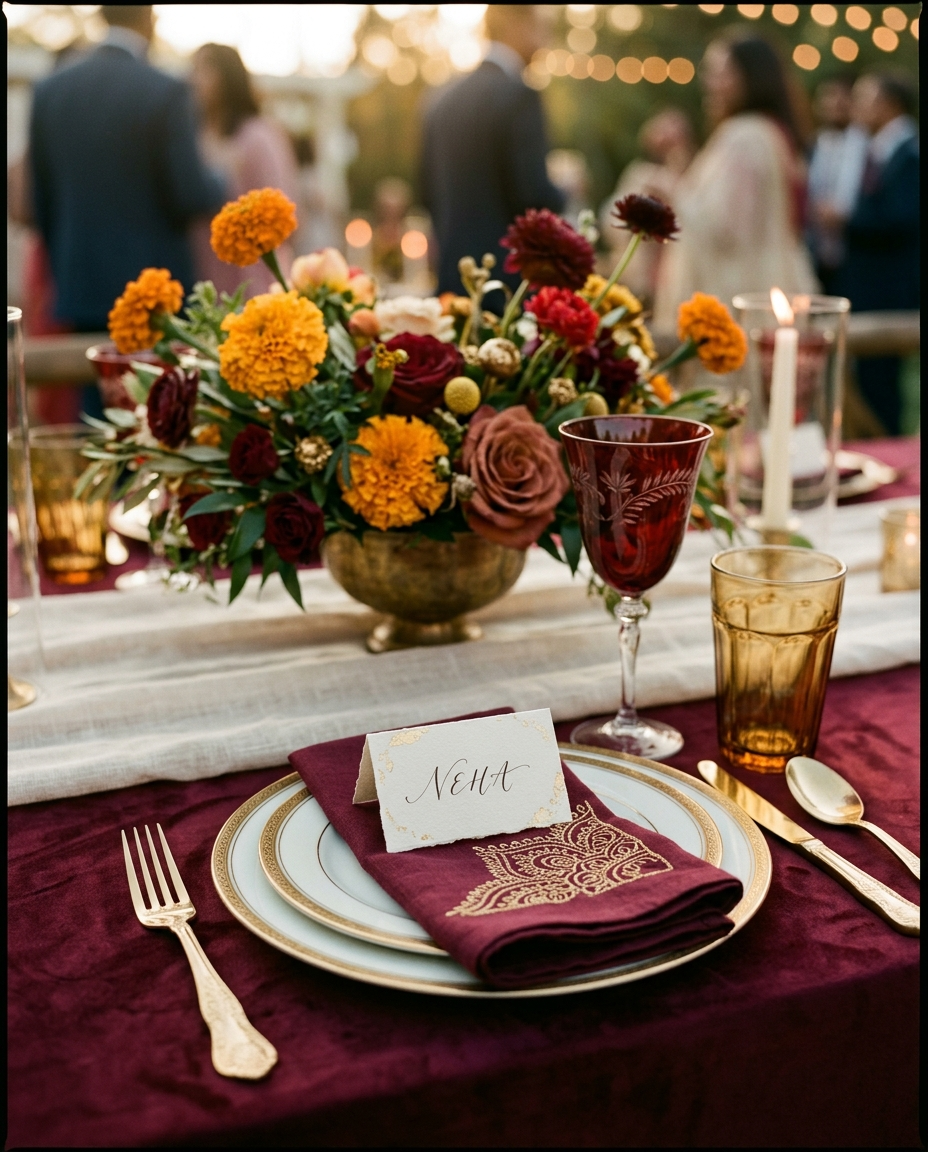
Reception design is where the Western influence is most visible. Plated dinners, formal speeches, first dance, cake cutting. Florals shift to cream and deep red rather than marigold. The bride often wears a white or pale-palette gown for the reception, sometimes with a Western-style mermaid or column silhouette, sometimes a modernized sari. The groom shifts to a tuxedo or a tailored sherwani in a darker, less traditional color.
Music at the reception is where the most successful fusion happens: a band that can play both Bollywood and pop classics, or a DJ who knows when to switch between English and Hindi tracks. Avoid the formula of "first hour Western, second hour Indian." The strongest receptions interleave the music throughout, letting older relatives and younger friends dance through the same evening.
Vendor selection: the fusion-specific challenge
Most U.S.-based wedding vendors have not done a South Asian wedding. The catering vendor who's never plated a vegetarian thali, the photographer who's never captured a haldi ceremony, the planner who's never coordinated a four-day event. This becomes the largest practical challenge of fusion weddings.
The fix is selective sourcing: hire a planner who specializes in South Asian weddings (the planning logistics are different enough to justify this). Then you can hire Western photographers, florists, and venues with guidance from someone who knows where the gaps are. Maharani Weddings and South Asian Bride magazine both maintain vendor lists worth starting from.
Attire across the events
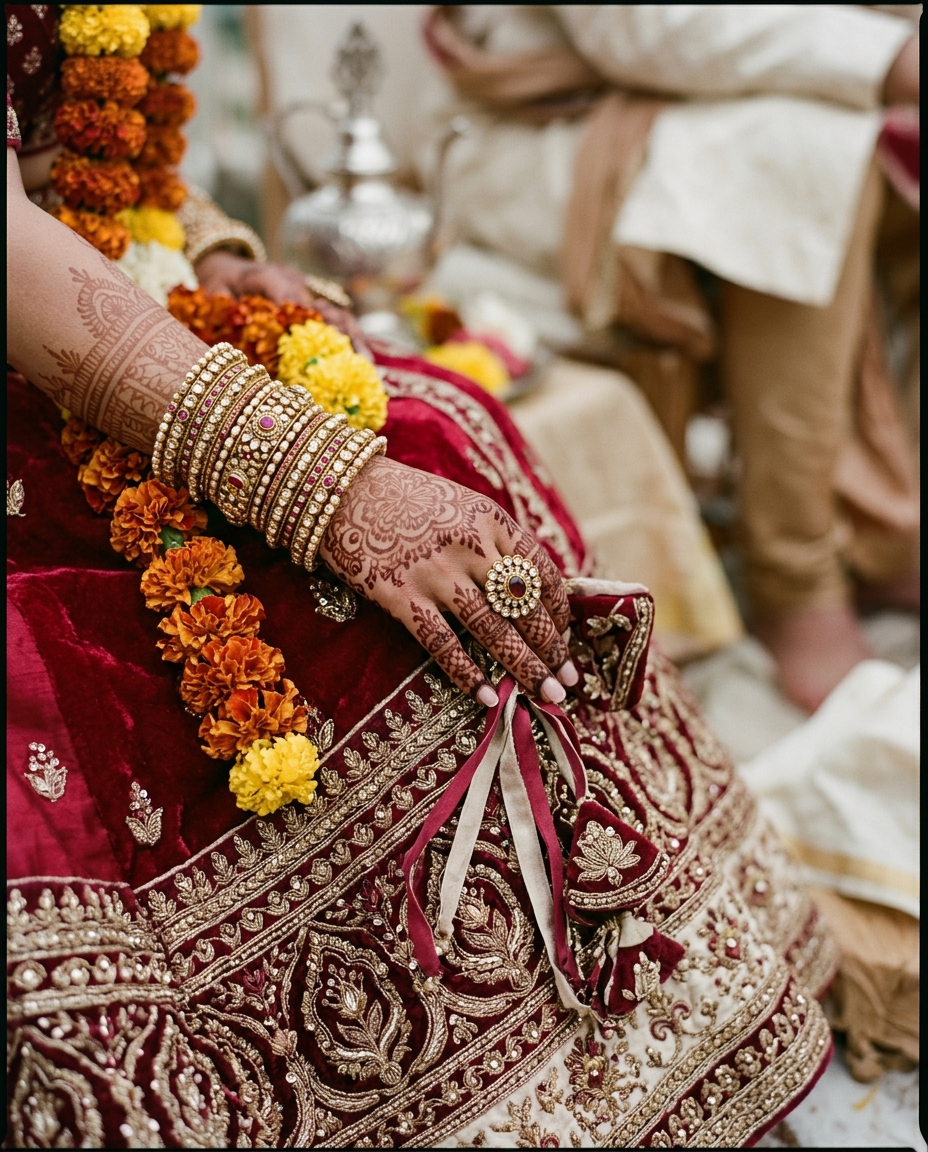
South Asian fusion brides typically have three to four outfits across the wedding sequence: a yellow or orange ensemble for haldi, a brightly colored lehenga for mehndi/sangeet, a red and gold lehenga for the wedding day, and either a Western-style gown or a modernized sari for the reception. This is more outfit changes than most Western weddings, and it's intentional. Each event has its own visual identity.
Grooms have shifted toward more modern sherwanis (cream, deep jewel tones, subtle embroidery rather than heavy zardozi) for the wedding day, and more Western tuxedos or sleek modern sherwanis for the reception. The mehndi groom outfit is the most casual of the events: kurta with light embroidery, often paired with white pants or jeans.
FAQ
Frequently asked
How long is a typical South Asian fusion wedding sequence?
Three days at the minimum (mehndi/sangeet combined, wedding day, reception), four days more commonly (separate mehndi and sangeet), occasionally up to a week including pre-wedding events like haldi and pithi. Most U.S. fusion weddings condense to three days for guest convenience.
What's the realistic budget for a South Asian fusion wedding?
Higher than a typical Western wedding due to multiple events, more outfit changes, and larger guest counts (300 to 500 is common). Most fusion weddings we feature run $80K to $200K, with mid-tier metro markets in the $100K to $150K range. The largest line items are catering across multiple events and venue costs for three or four days.
How do I make sure my non-South-Asian guests feel included?
A printed program in English explaining each ritual is the single most-appreciated guest gesture we hear about. Brief written context for the haldi, mehndi, baraat, pheras, and pheras meaning. Most non-South-Asian guests want to participate but don't know what's happening. Tell them.
You might also love
More in By Culture & Tradition
DIY + Inspo · 5 min
Try These 29 Wedding Guest Book Ideas (Do It This Weekend)
Wedding guest book ideas couples actually look at later. DIY formats, prompts that work, and the categories that age well (versus the ones that don't).