Save This Smart Wedding Registry Ideas Checklist
Wedding registry ideas that get used (and the ones couples regret adding). Plus how to handle cash funds, group gifts, and registry etiquette in 2026.
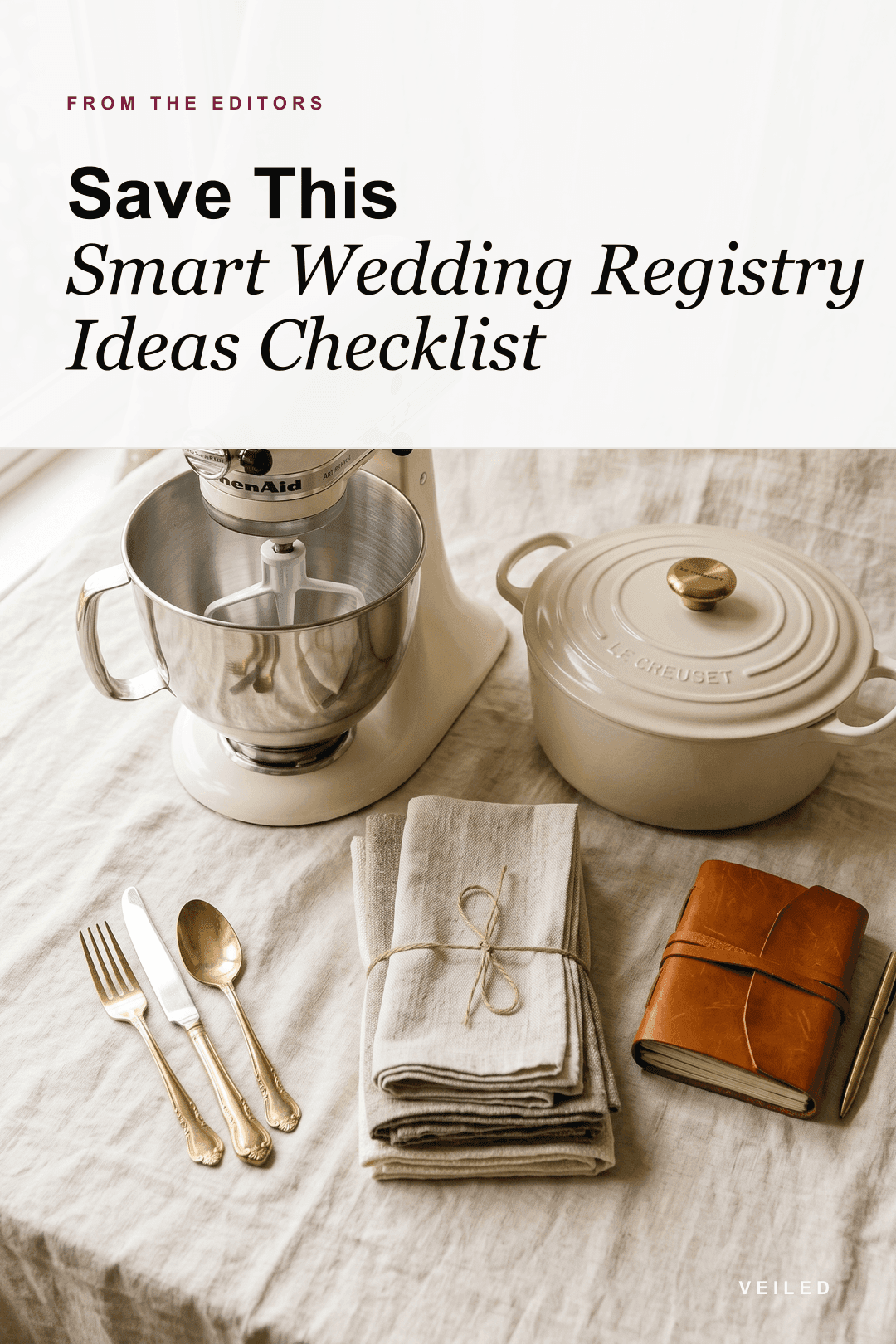
Wedding registry ideas in 2026 look almost nothing like wedding registries in 2016. The average couple now lives together before the wedding, has roughly 60 percent of household basics already, and is more likely to register for experiences and cash funds than for the formal place setting. The Knot's 2024 Real Weddings Study tracks the shift: honeymoon funds appear on 71 percent of registries, while china appears on 23 percent, down from 56 percent ten years ago.
The 2026 registry, in plain numbers
Couples we've audited list between 80 and 150 items on their wedding registry. About 65 percent of those items are housewares (kitchen, bedding, linens), 20 percent are experiences or cash funds, and the remaining 15 percent are decor or sentimental items. The cash-fund portion has roughly tripled since 2018.
Registry choice (Zola, Amazon, Crate & Barrel, Bloomingdale's, Honeyfund, or a universal aggregator like MyRegistry) tends to lock in your guest experience more than the items themselves. Universal registries that pull from multiple stores work well for couples whose taste spans categories. Single-store registries make returns easier and tend to generate better discount codes for the couple after the wedding.
What to register for: the categories that get used
These are the categories where couples a year out from their wedding tell us they're still actively using the registry gifts. The pattern: high-quality versions of things the couple already uses, not aspirational items they imagine using.
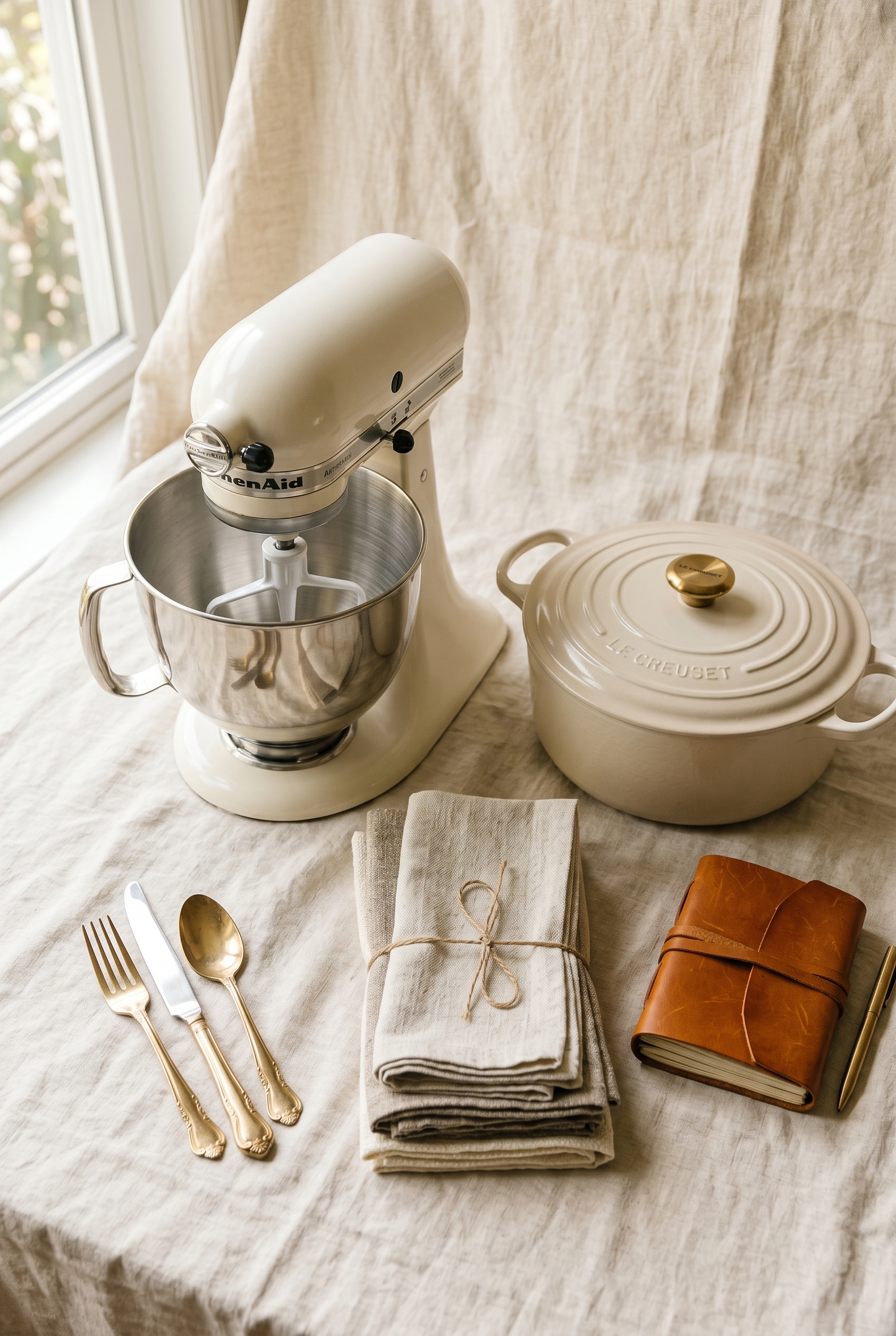
- Quality cookware (Le Creuset Dutch oven, All-Clad sauté pan, Lodge cast iron) — daily use, lasts decades
- Stand mixer + attachments (KitchenAid bowl-lift) — couples either use it weekly or never; ask honestly which type you are
- Bedding upgrades (linen sheets, weighted blankets, quality down pillows) — daily use, harder to justify buying yourself
- Knife set or single chef's knife (Wüsthof, Mac, Misono) — daily use; one $200 knife beats a 12-piece $300 set
- Honeymoon experiences via Honeyfund or Zola — itemized so guests pick a specific dinner, snorkel trip, hotel night
"Designing the registry around how guests actually buy is the simplest improvement most couples can make."
Cash funds without it feeling tacky
The format that reads thoughtful in 2026 is itemized cash. Instead of a generic 'honeymoon fund' with a dollar goal, list specific experiences (a private dinner at a Lisbon restaurant, a sailing day in Croatia, two extra hotel nights) at specific dollar amounts. Guests pick the one they want to fund, get to imagine the moment they're contributing to, and feel like they bought a real gift.
Honeyfund, Zola, and The Knot all support this format. The titles you give each item matter: 'Dinner at Belcanto, Lisbon — $150' reads better than 'Honeymoon Fund — $150 contribution.' Same money, different experience for the giver.
Items couples consistently regret adding
Formal china. We've asked couples a year out and the consistent answer is the china is in a cabinet and they're either dreading the next host obligation that requires it or planning to sell it. The use case it's bought for (formal dinner parties hosted at home) has mostly evaporated. Crystal stemware sits in the same category.
Specialty appliances (waffle makers, ice cream churns, pasta makers, bread machines) underperform consistently. Use rate within the first year hovers around 8 percent, then drops further. The exception is the espresso machine, which couples either use daily or sell within six months — register for one only if your morning routine already requires good coffee.
Decorative items from registries (vases, picture frames, decorative bowls) tend to feel disconnected from the couple's actual taste once the wedding is over. Better to skip these and let the couple buy decor as they live in the space.
Items couples regret not adding
The most common regret is registering for too few items in the $20-$50 range. Aunts and family friends often want to give a gift but don't want to spend $300 on a single item, and a registry that only has $300+ items leaves them buying something off-registry that doesn't fit. A floor of 30 to 40 sub-$50 items keeps the gift flow flowing.
Another regret: skipping linens entirely. Couples who feel set on bedding before the wedding often discover they're using mismatched twin-size sheets from college that don't fit the new bed. Quality king-size sheets, bath towels, and a couple of good throw blankets are the gifts couples pull out and use immediately.
And cash funds for big-ticket future purchases. Couples planning to buy a house in the next 2-3 years should register for a 'first home' fund alongside the wedding registry. The Knot and Zola both support down-payment funds, and the contribution rate from family members tends to be high.
The 80/20 of what to register for
The framework that works: identify the 5-7 items you'll actually use within the first year, register for the upgraded version of each ($300-$800 each), then fill in 30-50 small items in the $20-$80 range, then add 3-5 cash-fund or experience items for guests who prefer that format. Total registry of 50-80 items rather than the 150-item kitchen-sink approach.
This pattern matches how couples actually receive gifts: a few large ones from family, many small ones from friends and colleagues, and several cash contributions from guests who'd rather skip the shipping logistics. Designing the registry around how guests actually buy is the simplest improvement most couples can make.
Honeymoon and charity contributions
Honeymoon funds work best when itemized (covered above). Charity contributions in lieu of gifts work when the cause is genuinely personal to the couple, mentioned in your wedding website backstory, and limited to one charity rather than a list. Spreading charity contributions across five organizations dilutes the gesture and confuses guests.
If you want to mix charity and traditional registry, the format that works is a small registry of essentials plus one charity option clearly framed as 'or, a contribution to [specific cause that matters to us].' Guests pick whichever feels right to them.
FAQ
Frequently asked
How many items should we put on our wedding registry?
Between 50 and 80 items, with a wide price range. The classic guidance to register for 'two to three items per guest' produces overwhelming registries that confuse buyers and pad with low-quality filler. Quality over quantity tracks better in 2026.
Is it okay to register only for a honeymoon fund and no household items?
Yes, and a growing share of couples in 2026 do exactly this. About 14 percent of registries we audit are honeymoon-fund-only. Just make sure to itemize the fund into specific experiences at specific dollar amounts so guests can pick a concrete moment to contribute to.
When should we open our registry?
About 6 to 8 months before the wedding, ideally before save-the-dates go out. The registry needs to be live by the time engagement-party season starts, since some guests will buy gifts for the engagement party itself. Aim to have at least 30 items live before the first save-the-date mails.