Save These 33 Wedding Hairstyles for Every Bride Vibe
33 wedding hairstyles real brides actually wore, sorted by veil, length, and humidity. Bun, half-up, boho braid, and short-hair looks with what to tell your stylist.
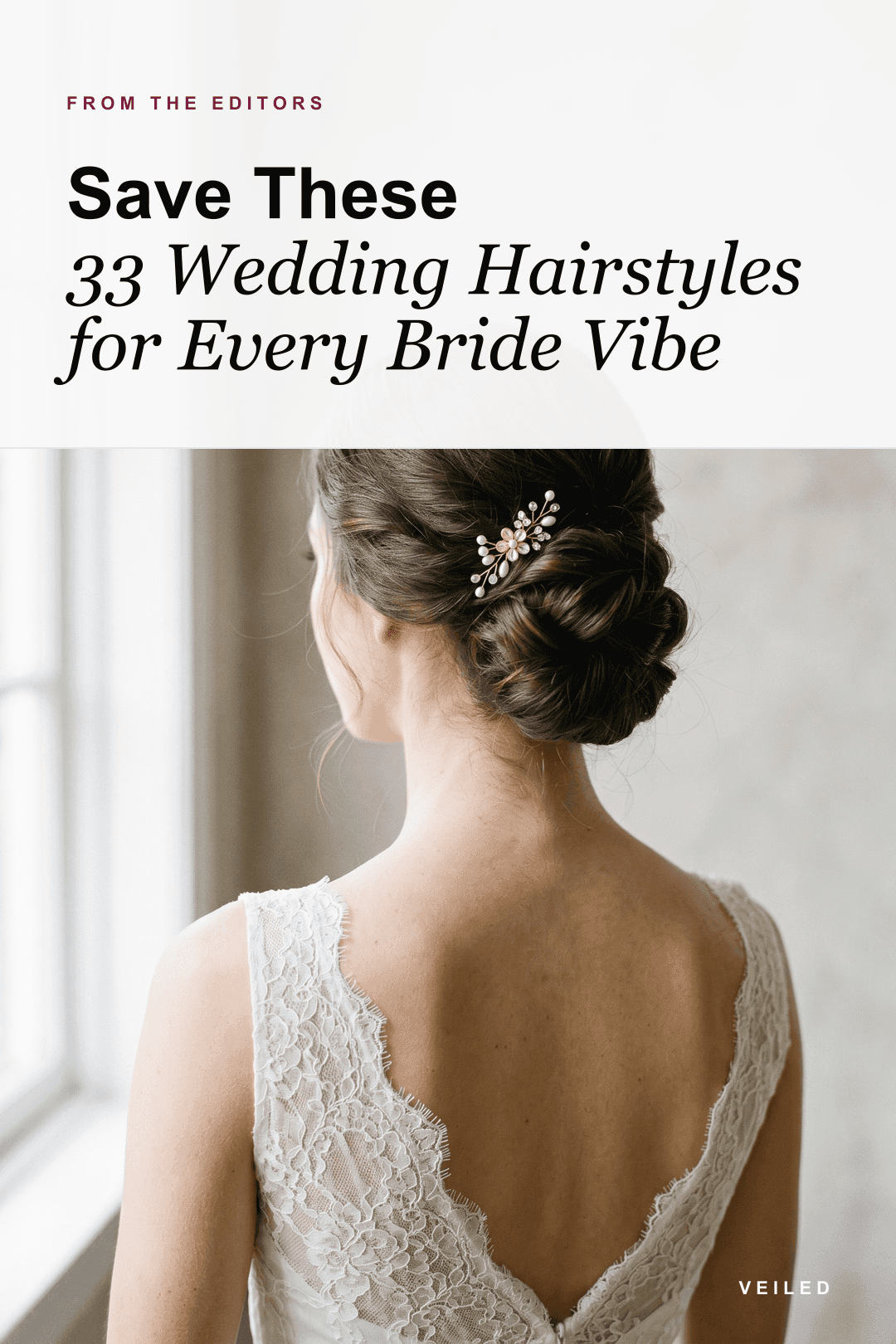
Picking wedding hairstyles is somehow harder than picking the dress, and I think the reason is that you can return a dress but you cannot un-cut bangs four days before the ceremony. Hair behaves differently in photos than it does in your bathroom mirror at 7am, and the bun that looks effortless on a Pinterest board is usually held together with about forty hidden grips and a small amount of prayer. The 33 looks below are organized by veil compatibility, hair length, and how hard each one fights back when it is 84 degrees and humid, because those are the three things that actually decide what stays on your head at 9pm.
Why your hairstyle is harder to pick than your dress
A dress fitting takes a fixed amount of time and has a single answer at the end. Hair has to survive a 12-hour day that starts at 6am with a flat iron and ends at midnight on a dance floor, and the answer changes depending on whether your stylist works thin baby-fine hair or thick coarse hair on a daily basis. Most brides book a stylist who is great at one of those and not the other, and they only notice during the trial.
The other variable nobody warns you about is the veil. A cathedral-length veil pinned at the crown pulls down on the front of your hairstyle for about 40 minutes of ceremony and portraits, and a polished low bun handles that pull better than a textured updo does. If you are doing a veil change for the reception, build that into the trial.
Low bun and chignon looks that read as elegant on every body type
Low buns are the most photographed wedding hairstyle on Pinterest for a reason, and the reason is that the silhouette flatters every face shape and works with every neckline. The version that photographs best is what stylists call a low pulled-back chignon: hair smoothed back over the ears, twisted into a soft loose bun at the nape, with a few face-framing strands left loose around the temples.
If you have fine or thin hair, ask your stylist to weave in two small wefts of clip-in extensions before the bun is formed. The cost is around 40 to 90 dollars at a Sally Beauty or amazon Halo Couture set, and the difference in photo volume is enormous. For thick or curly hair, you do not need extensions; you need the right kind of hold spray, and Oribe Superfine is the one most NYC stylists rely on.
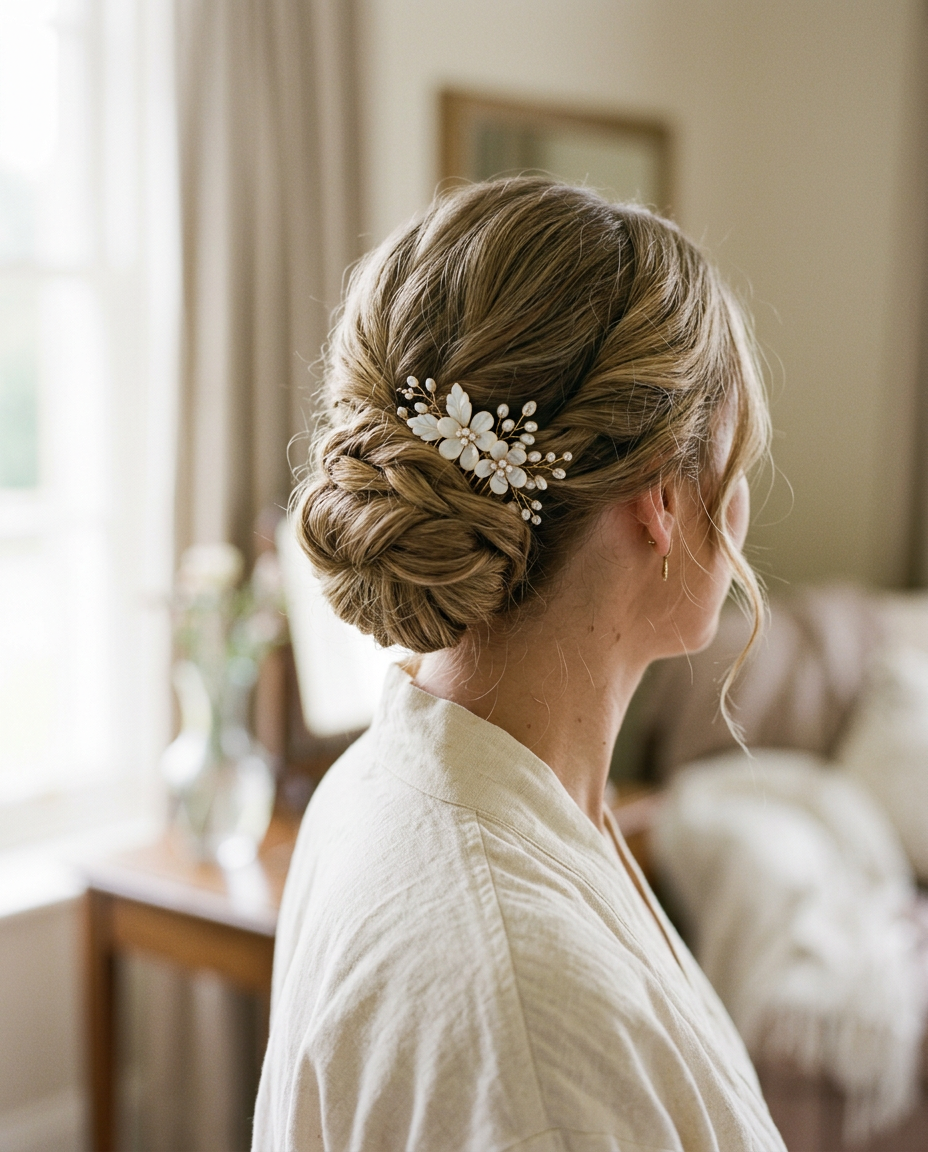
"The bun that looks effortless on a Pinterest board is usually held together with about forty hidden grips and a small amount of prayer."
Half-up wedding hairstyles that play nicely with a veil
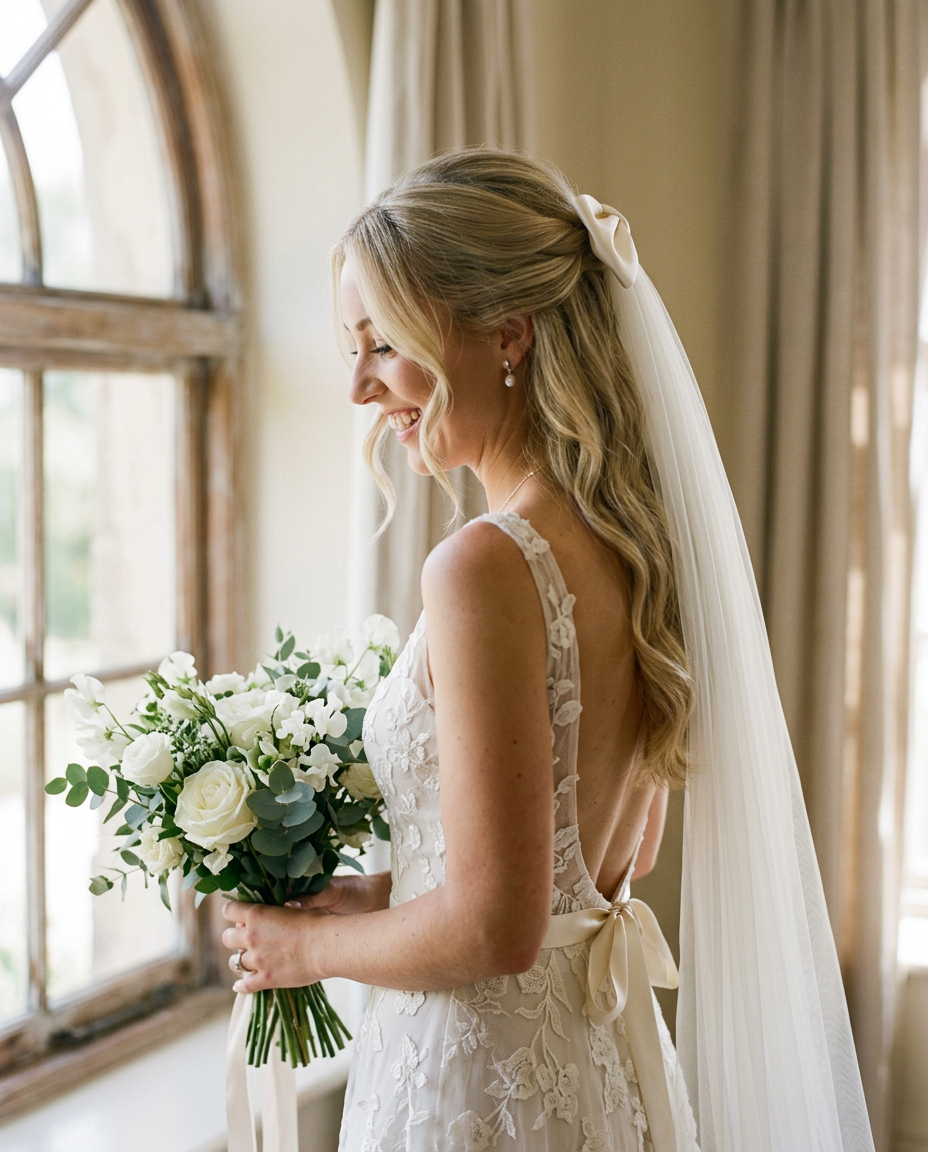
Half-up styles are the friendliest option if you want hair down for the reception but veil-compatible for the ceremony. The trick is where the veil attaches. A veil pinned underneath the half-up section sits invisibly during the aisle walk and lifts away cleanly during the first dance without disturbing the style.
Two specific looks come up in real wedding submissions over and over: the satin bow half-up, popularized by brides like Sofia Richie's circle, and the soft swept-back twist that pulls one inch of hair from each temple, secures it at the crown, and hides the seam with a small pearl barrette. Both work on hair from shoulder length down.
Modern updos that survive an 84-degree humid day
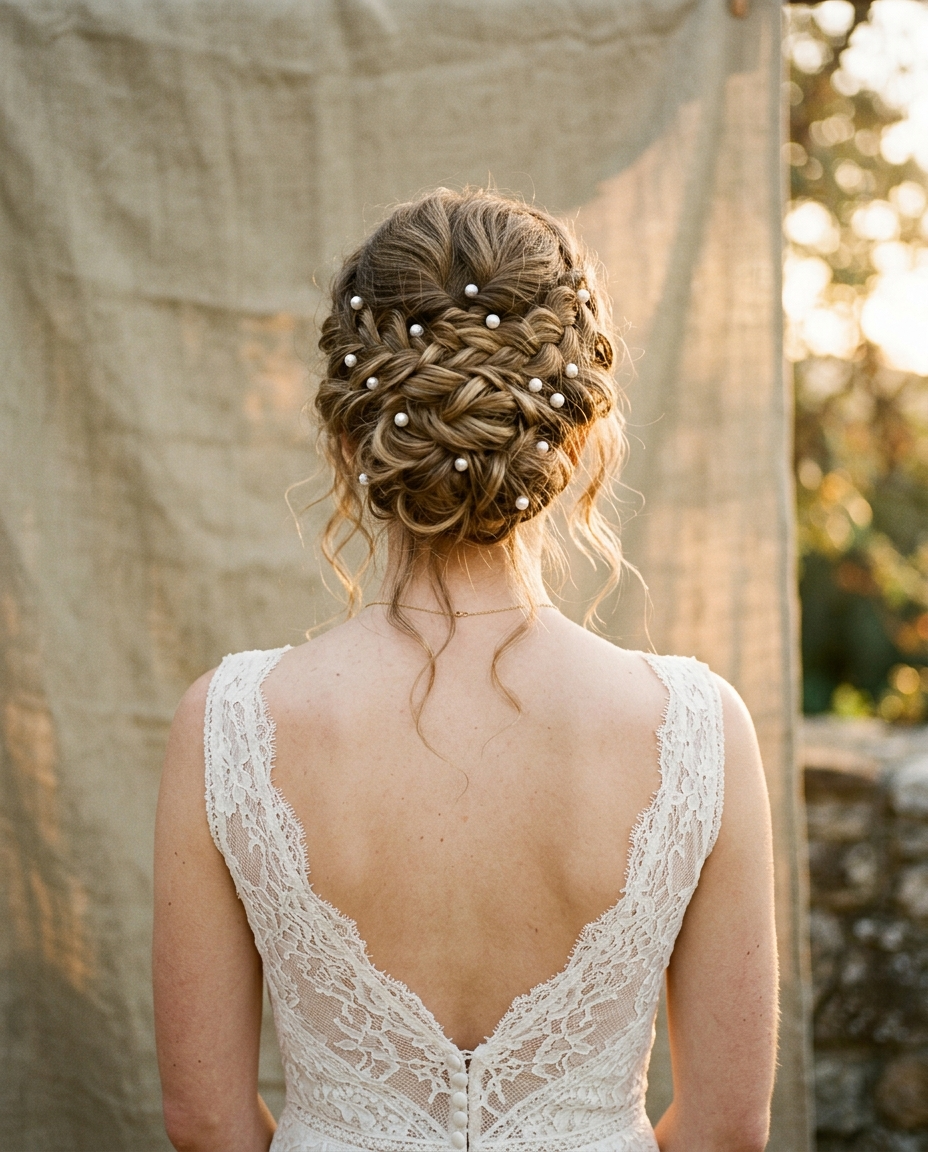
Most updos that look effortless in the morning fall by 4pm because the structure was held together with bobby pins alone. The updos that genuinely survive humidity have three things in common, and I will list them below because every bride who has cried at the cocktail hour about her hair would have wanted this checklist.
Build the updo with a hidden interior braid as the structural skeleton, then drape the textured pieces over it. The braid acts as a load-bearing wall while the outer pieces give the soft tousled look. This is the technique professional stylists use on humid destination weddings in Charleston, Miami, and Tulum.
- Sectioned and twisted with at least one hidden interior braid for structure
- Anchored with curved hairpins like the ones from Goody or Conair, not flat bobby pins which slide out as you sweat
- Locked with a non-aerosol working spray like Bumble and Bumble Thickening Hairspray, then a final mist of L'Oreal Elnett for hold without crunch
- Touched up at the 4pm mark by either your stylist on retainer or a trusted bridesmaid with one specific job
Wedding hairstyles for short hair that do not look like an afterthought
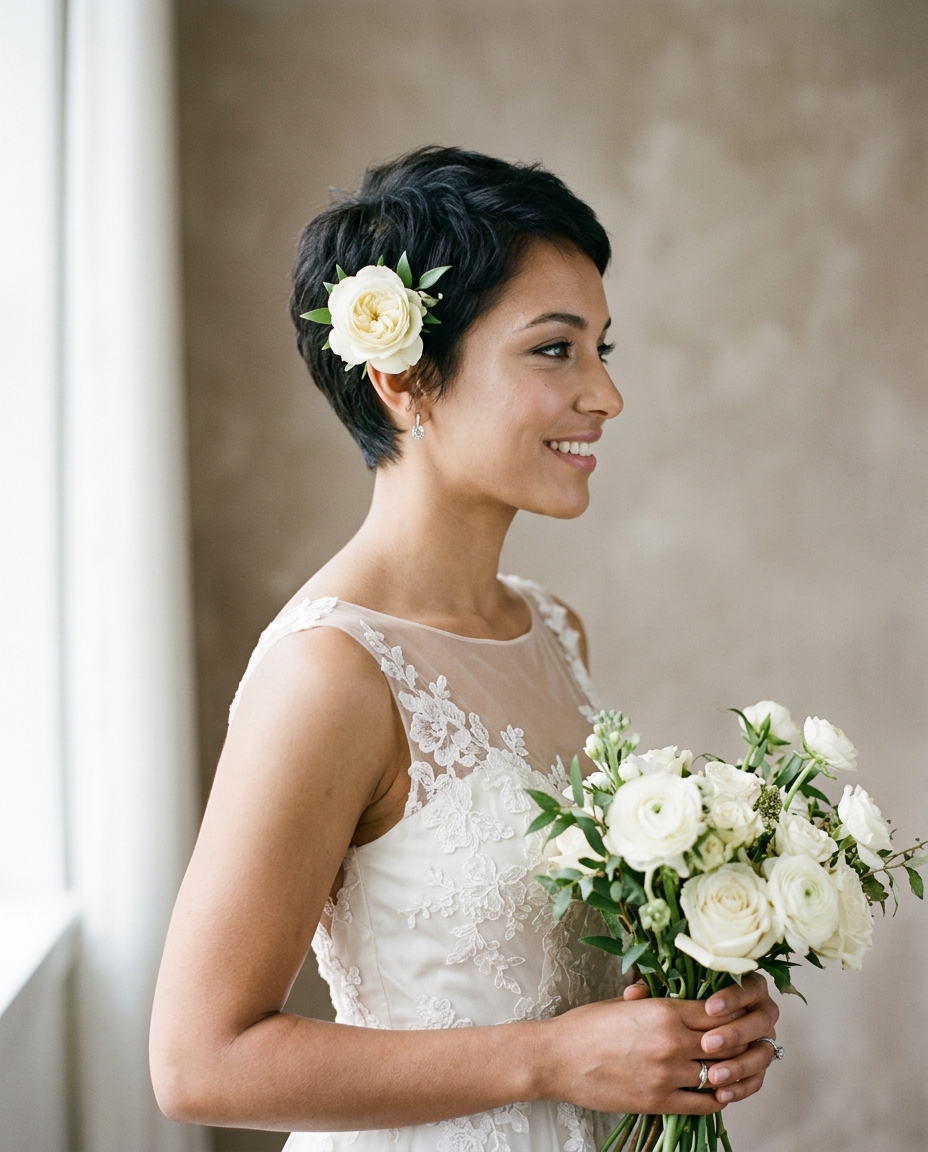
Short hair brides are quietly the best dressed at every wedding I have looked at on Pinterest in the last year. A pixie or a chin-length bob photographs beautifully under a veil because the silhouette is clean and the styling does not have to compete with the dress for attention.
The two looks that perform best for short hair are a sleek side part with a tucked-behind-the-ear single fresh flower, and a soft finger wave done with a curling iron on a barrel one size smaller than your usual. Brands like Schwarzkopf Got2b have a freeze-spray gel that holds the finger wave for the full day without flaking. Skip the bridal headband unless your hair is at least chin-length; on shorter cuts the headband ends up sitting above the hair instead of in it.
Boho braids and crown styles for outdoor weddings
Boho hair has aged better than anyone expected. The fishtail crown braid, the loose Dutch braid down one side, and the romantic half-up with woven baby's breath are still on every spring 2026 mood board I have seen, and they read better outdoors than they do indoors. Sunlight catches the texture; flash photography flattens it.
If your venue is a vineyard, a backyard, or anything with vines or a garden, lean into a crown style with real seasonal foliage rather than silk. Olive leaves, eucalyptus, or unsprayed wildflowers from a local farm look right in a way that craft-store silk never quite does.
What to tell your stylist at the trial four weeks out
The trial is where the wedding hairstyle gets won or lost. Brides who walk in with three reference photos and a description of the day usually leave with a look they trust. Brides who walk in with twenty reference photos and a verbal description that ends in 'I will know it when I see it' usually need a second trial.
Tell your stylist three specific things at the trial: how long your hair has to hold, what kind of weather the ceremony is in, and what physical activity is in the day. A boho braid that survives a beach ceremony is not the same boho braid that survives a hora at a Jewish reception. Be honest about the dance floor part. The stylist can build the structure to match if you give them the information.
FAQ
Frequently asked
How early should I book my wedding hair trial?
Book the trial 4 to 8 weeks before the wedding, after your final dress fitting. Earlier than 8 weeks and your hair color or length may shift before the day; later than 4 weeks and you do not have time for a second trial if the first one misses. Bring your veil, your earrings, and a photo of the dress neckline to the appointment.
Should I wash my hair the morning of the wedding?
Most stylists prefer hair that is one day dirty because clean fine hair does not hold pins as well. Wash the night before, sleep on a silk pillowcase, and skip the conditioner near the roots so there is enough natural grip for the style to lock in. Bring a small can of dry shampoo to touch up before the ceremony.
Do I need extensions for wedding hair?
Only if your hair is fine, short, or if the style requires more volume than you have. A simple low bun or a half-up does not need extensions on average hair. Cascading curls, voluminous Hollywood waves, or thick fishtail braids usually do. Tape-ins are not worth it for a single day; clip-ins or Halo-style extensions are.