Save These 25 Wedding Seating Chart Ideas Worth Copying
25 wedding seating chart ideas: mirror displays, tag boards, escort cards, floral walls, and digital options. Plus the two seats nobody plans for.
Wedding seating chart ideas get a disproportionate amount of attention in the planning phase and a tiny amount of the actual budget, which is backwards because the seating chart is the first thing every guest interacts with at the reception. The 25 displays below have all been tested against the question 'can a 73-year-old guest in low light find their name in under 30 seconds.' That sounds specific because it is the single most common point of friction at receptions, and most stylized seating charts fail it.
Why seating chart drama gets worse, not better
Seating chart drama is the planning task most brides delay because it requires confirmed RSVPs, accurate plus-one counts, and decisions about family politics. By the time the RSVPs come in 4 weeks before the wedding, the seating chart has 2 weeks of attention max before final counts go to the venue.
The drama gets worse, not better, when you delay. People drop out, plus-ones materialize, divorces happen, and you have to redraw the whole thing twice. Start the seating chart the moment you have your guest list, even before invitations go out. The structure can absorb edits later, but the structure itself takes the most thinking.
Mirror and acrylic seating chart display ideas
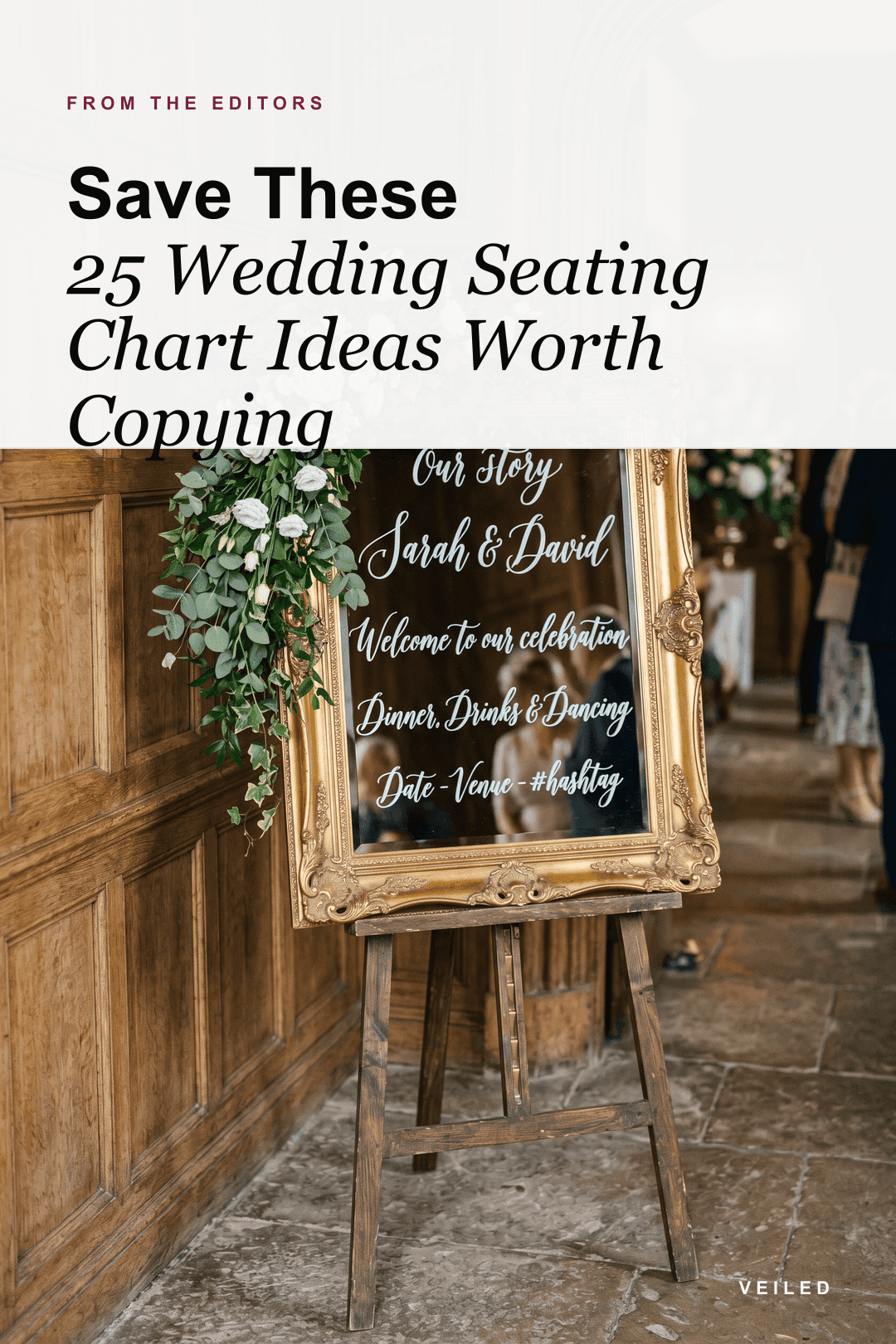
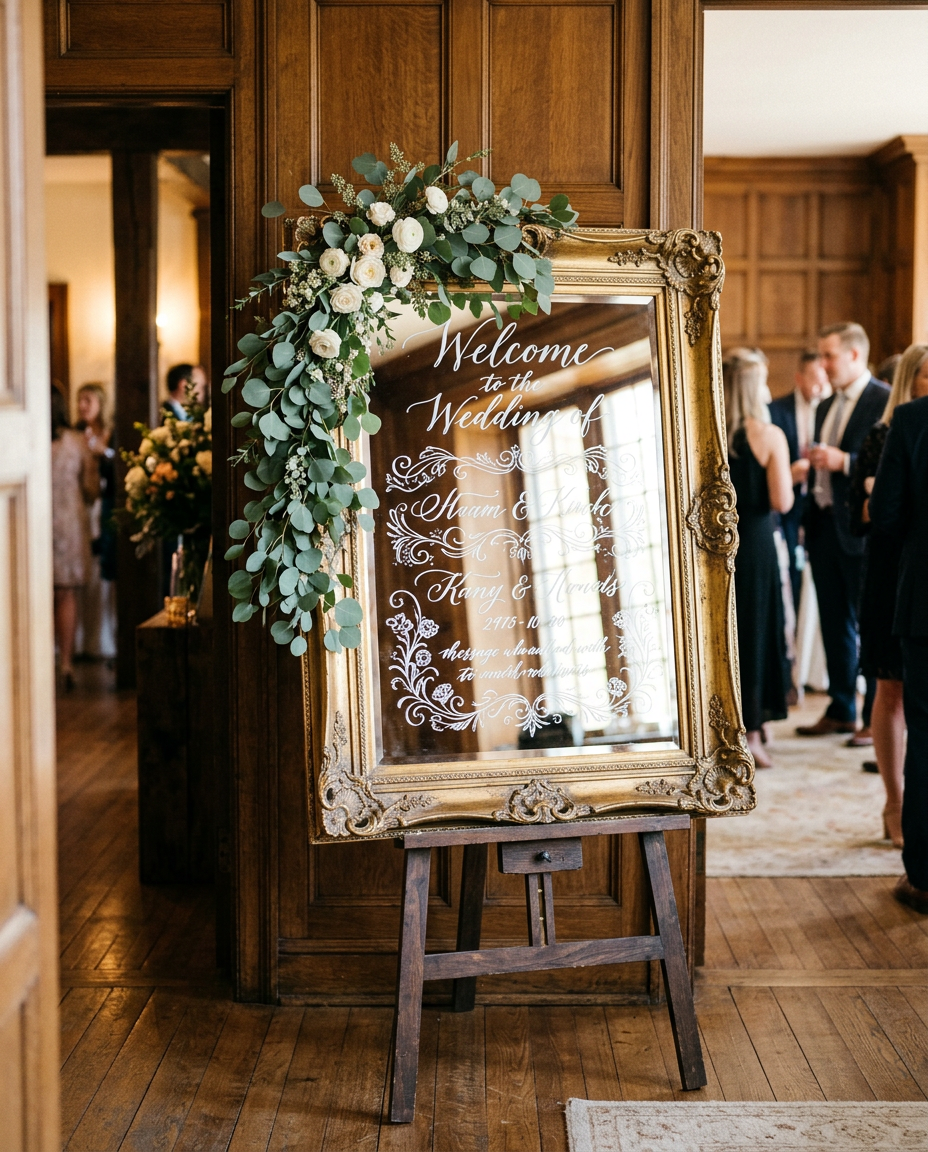
Mirror seating charts (calligraphy directly on an antique gold-framed mirror) are the single most-pinned format on Pinterest in the seating-chart category. The reason is that they photograph beautifully against any reception backdrop and they read as upscale without much effort.
The two practical issues with mirror displays are weight and legibility. A mirror big enough for 150 names weighs 30 to 60 pounds and needs a sturdy easel. The calligraphy ink also gets harder to read in low light, especially for guests with bifocals. Place the mirror near a window or in a well-lit hallway, not in the center of a dim ballroom.
"The seating chart is the first thing every guest interacts with at the reception. Most stylized charts fail the 30-second test for a 73-year-old guest in low light."
Tag-and-twine seating chart board ideas
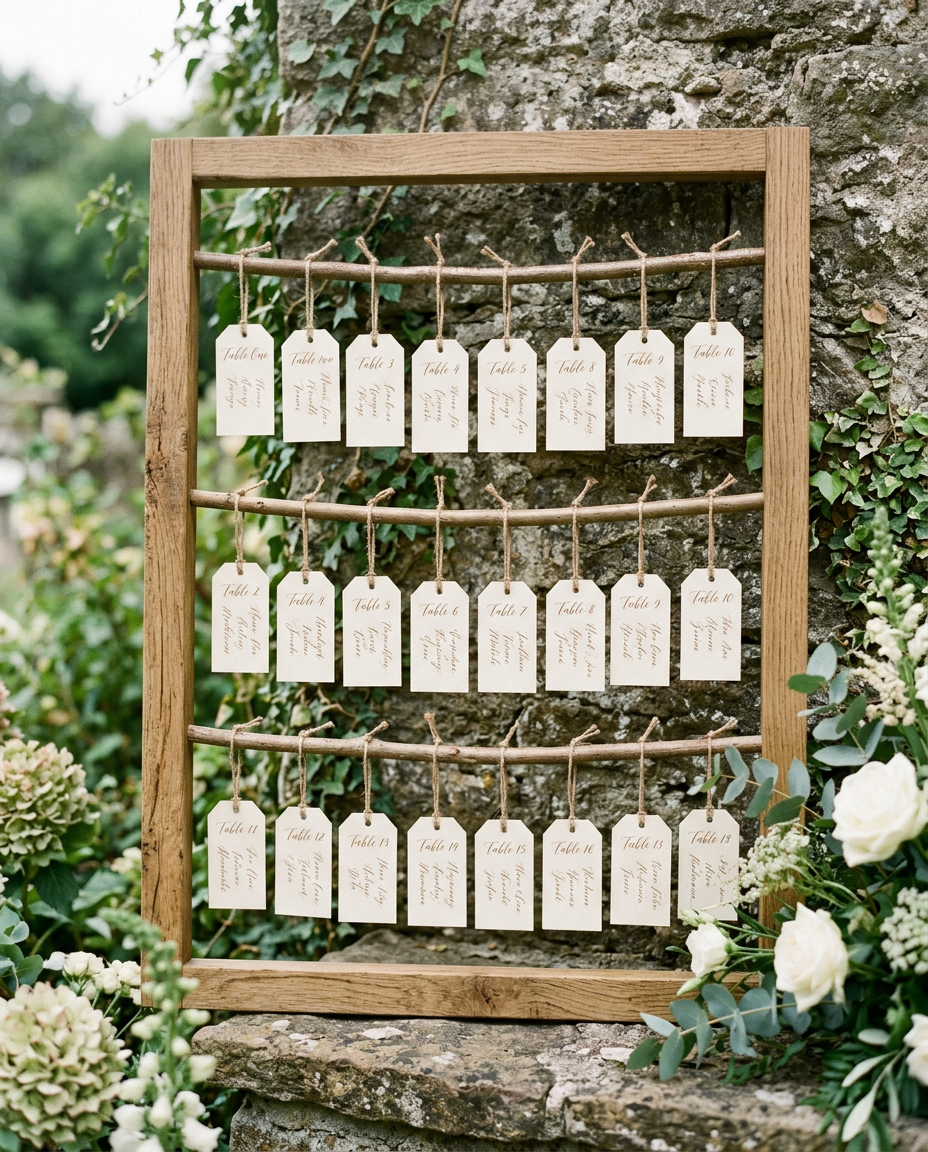
Tag-and-twine boards (small cardstock tags hanging from wooden dowels by hand-tied twine) are the format I have seen most on rustic and outdoor weddings in the last two years. They cost about $40 to $100 to make from craft supplies, they photograph beautifully outside, and guests find their names quickly because each tag is a discrete unit.
The risk with tag-and-twine is wind. An outdoor wedding with even a light breeze will spin the tags around so the guest's name is facing the wrong way. Anchor each tag with a small dab of museum putty or a tiny weight at the base, and the display reads cleanly all night.
Escort cards vs. seating chart: what's right for your wedding
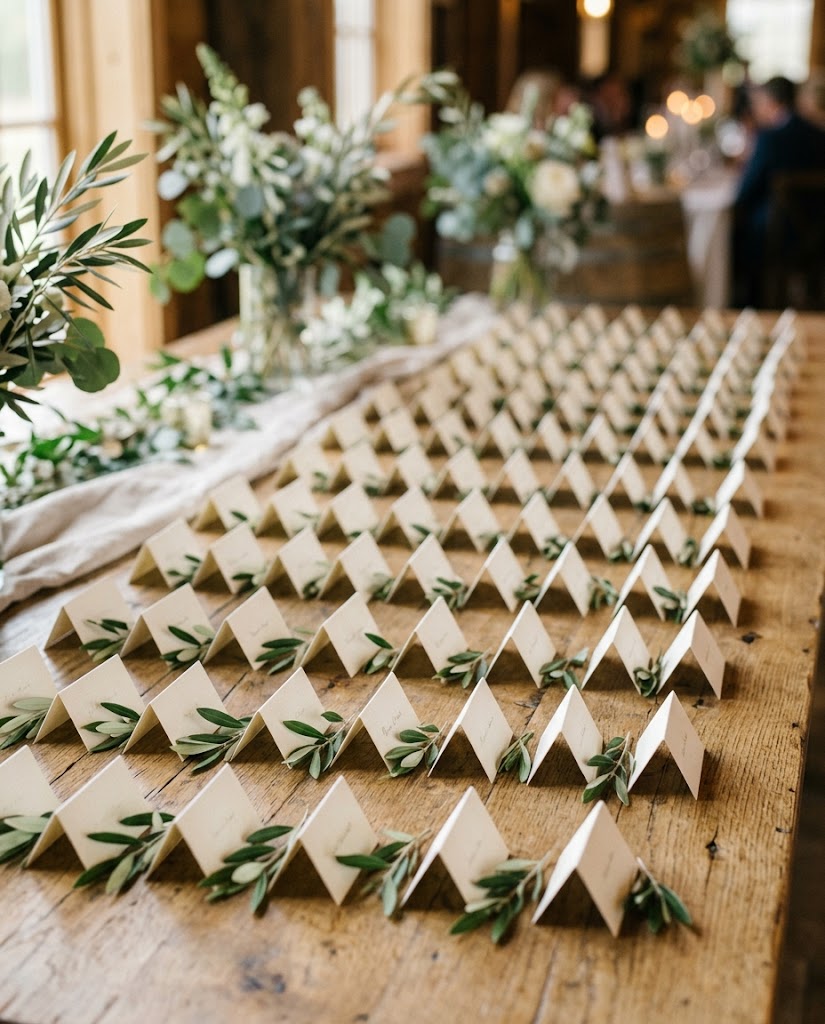
Most weddings use one of two formats: a centralized seating chart (one display, all the names) or individual escort cards (one card per guest, picked up at the table on the way in). They serve different purposes and the right answer depends on the layout of the venue.
A centralized seating chart works when guests enter the reception space through one door and pass the display naturally. Individual escort cards work better when the reception is in a larger space with multiple entrances or when the cocktail hour is in a separate room from the reception. The list below covers when to pick each.
- Centralized seating chart: best for single-entry venues, smaller weddings (under 120 guests), and budget-friendly setups that need only one decor piece
- Individual escort cards: best for multi-room venues, larger weddings (over 120 guests), and any wedding where guests have unique meal selections that need to be communicated to servers
- Hybrid (escort cards at the entrance + small table number on each table): best for weddings where the cocktail hour is in a separate space from the seated dinner
- Digital-only seating: best for outdoor weddings, low-budget weddings, and weddings where the seating arrangement is loose family-style rather than assigned seats
Floral wall and installation seating chart ideas
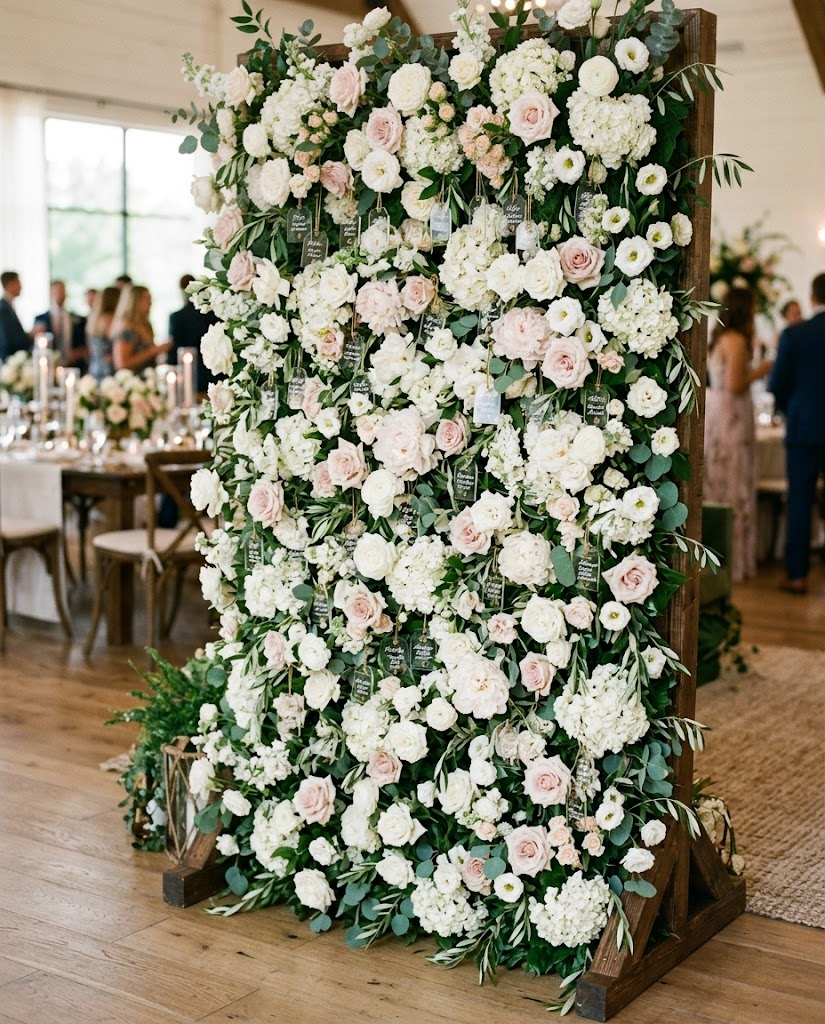
Floral wall seating charts are the editorial-level upgrade, and they cost about $1,500 to $4,000 depending on the density of florals. Small acrylic name tags or pinned cardstock names scatter across the floral surface, and the wall doubles as a photo backdrop for cocktail hour.
The catch is that floral walls need to be built and installed on the day of the wedding, which adds 2 to 4 hours of labor at the start of the timeline and a separate breakdown crew at the end of the night. If your venue has a tight load-in window, ask the florist about a faux floral wall instead, which can be built off-site and installed in 30 minutes.
Digital seating chart ideas for outdoor weddings
Digital seating charts (a QR code on a sign that opens a webpage with the seating list) are increasingly common for outdoor and destination weddings where weather and breakage are real risks. They cost almost nothing, they update in real-time if seating changes the morning of, and they fail completely if the venue has no cell signal.
Test the cell signal at the entrance to your reception venue before committing to a digital-only chart. If the signal is weak, print 30 backup paper copies of the seating chart and have a member of the bridal party hand them out at the door. The hybrid prevents the awkward 'we cannot find our table' moment.
The two seats nobody plans for
Every wedding has two seats that get forgotten in the chart: the photographer's seat and the DJ or band's seat. Both vendors typically need a place at the reception for the meal break, and neither is on the guest list. The venue assumes the bride budgeted for them; the bride assumes the venue included them.
Add the photographer and the DJ to the seating chart explicitly, usually at a vendor meal table positioned near the kitchen exit so they can leave easily to capture moments or change the music. Confirm the vendor meal count with the caterer 2 weeks before the wedding and add it to the final guest count for the seating chart.
FAQ
Frequently asked
How far in advance should I finalize my seating chart?
Final seating goes to the venue and caterer 1 to 2 weeks before the wedding, depending on the venue's rules. RSVPs are due 3 to 4 weeks before, which leaves a 2-week window for the actual chart work. Start drafting the seating chart structure as soon as you have a guest list, and only fill in names once RSVPs close.
Should children have their own table?
A children's table works if you have at least 6 children over the age of 5 and at least one designated adult to supervise them. With fewer than 6 children, seat them with their parents. Children under 4 should always sit with their parents regardless of count, and the parents need to be told in advance whether the venue allows high chairs.
How do I handle a divorced family at the seating chart?
Place divorced parents at separate tables, both close to the bridal party but not adjacent to each other. If one parent has remarried, the new spouse sits at the same table as that parent. Talk to both parents 8 weeks before the wedding about who else they want at their table, because the answer often clarifies seating decisions you cannot make alone.