Pin These 21 Wedding Photo Ideas You Haven't Seen Yet
Wedding photo ideas worth pinning before your wedding day. Real moments, golden-hour structure, and the shots couples wish they'd asked for.
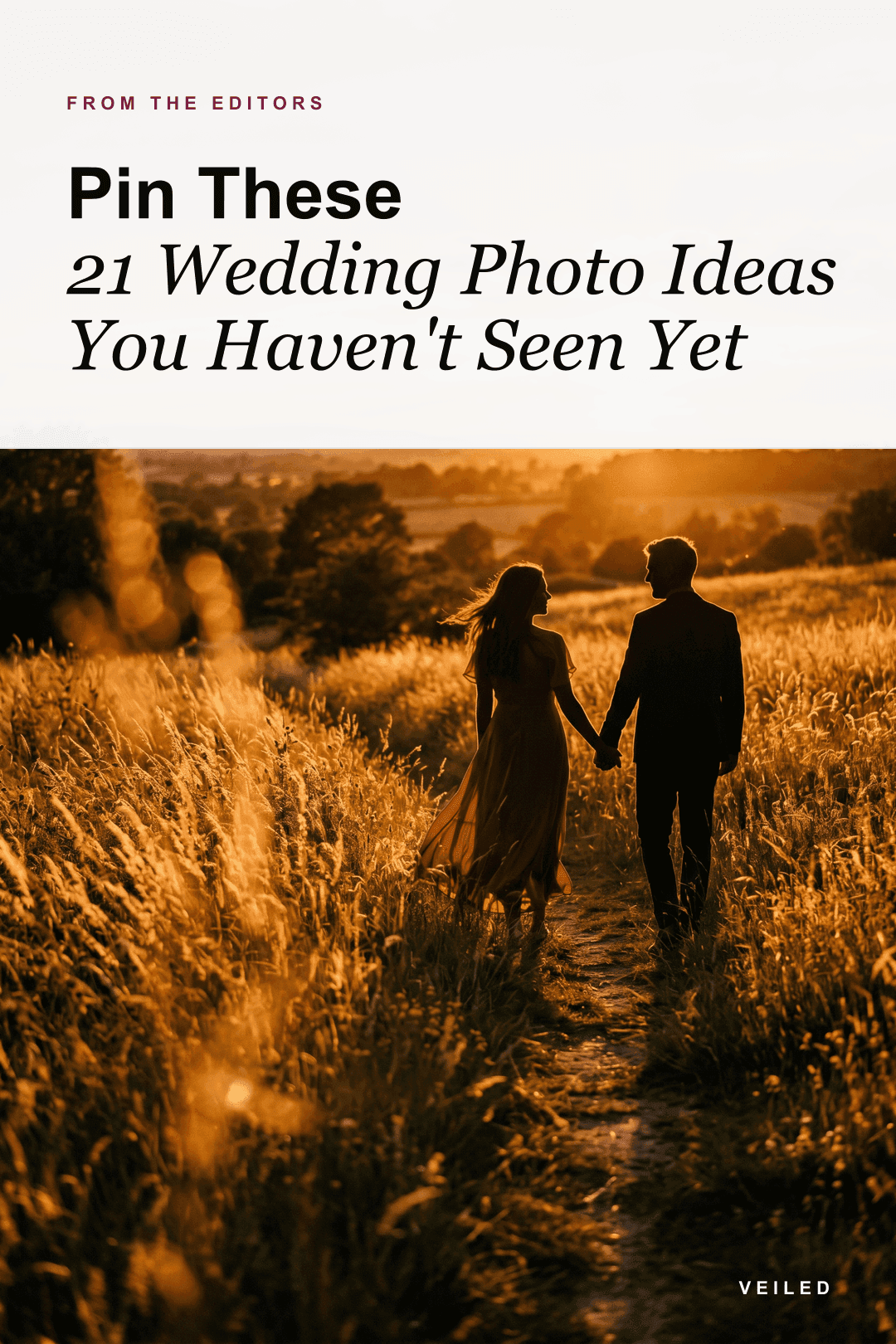
Wedding photo ideas saturate Pinterest, and the saved boards mostly fall into two camps: the same five poses every wedding gets, and aspirational shots that depend entirely on the venue's existing infrastructure. The photographs couples a year later actually frame and revisit follow different patterns. Real moments captured rather than performed. Golden-hour structure baked into the schedule. A few specific shot requests they wish they'd put on the must-shoot list. Here are the wedding photo ideas worth pinning before your big day.
Why most wedding photo lists miss the point
Standard wedding photo idea lists default to poses. The first-look pose, the bride-with-dad pose, the wedding-party-jumping-in-the-air shot. These are the photographs every wedding gets and every wedding album includes. They're fine. None of them are what couples come back to a year later when they pull the album off the shelf.
The photographs that get framed are different. Documentary moments captured rather than staged. Couples laughing at a private joke during the toast. A grandmother's hand on her grandson's shoulder during the first dance. The dog the couple brought to the cocktail hour walking under a long table. The shots that age best are the unposed ones; the posed ones photograph as posed within five years.
Getting-ready details (the underrated category)
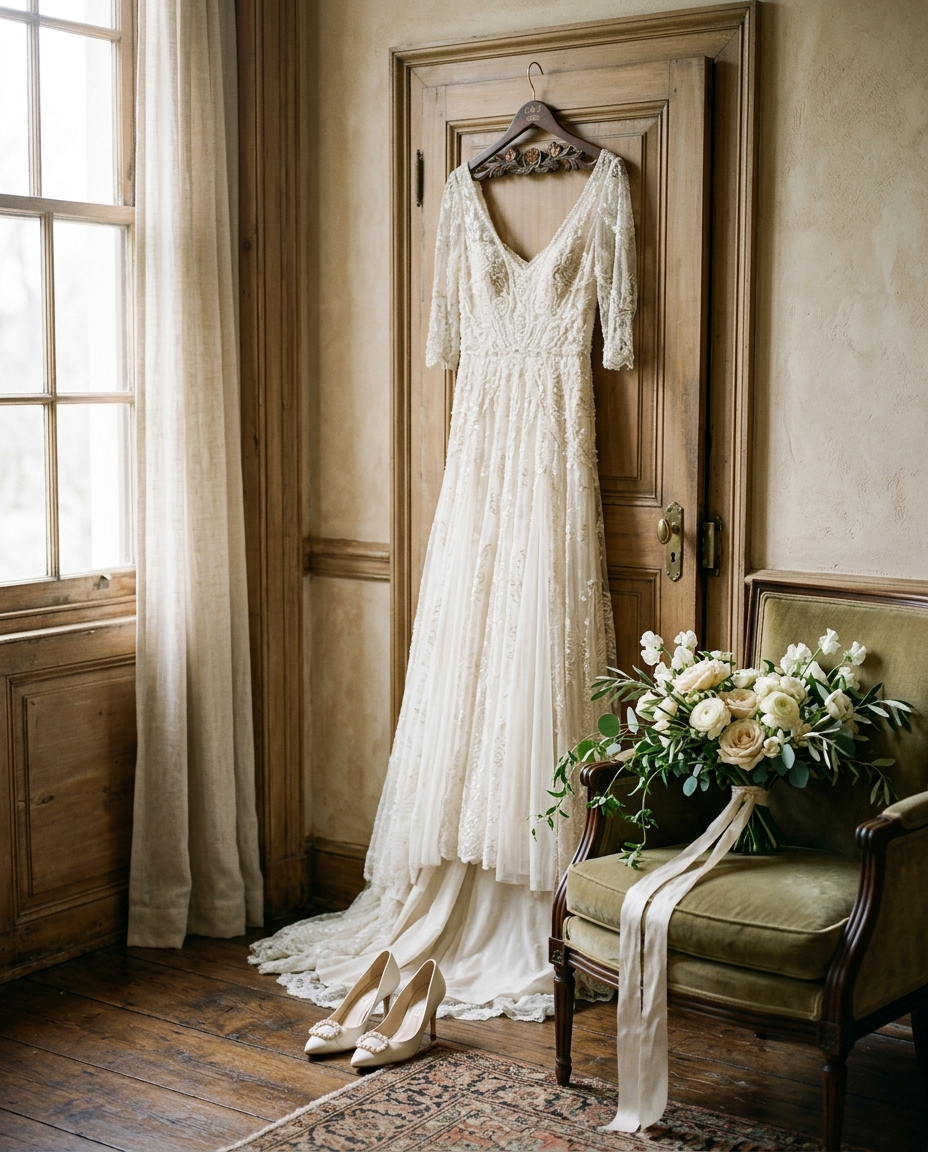
Getting-ready coverage tends to focus on the people (bride with her bridesmaids, groom with his groomsmen). The shots that actually get framed are the details: the dress hanging in soft window light, the rings on a small cream pillow, the bouquet resting on a chair, the perfume bottle on a vanity, the handwritten letter from one partner to the other.
These shots cost the photographer almost nothing in time (10-15 minutes early in the morning before anyone has dressed) but produce some of the most-pinned and most-framed wedding images. Specifically request a 'detail shot block' on your timeline; without it, photographers default to people coverage and the details often get missed.
"The photographs that get framed are the unposed ones. Documentary moments age well; coordinated poses photograph as coordinated within five years."
Documentary cocktail-hour shots
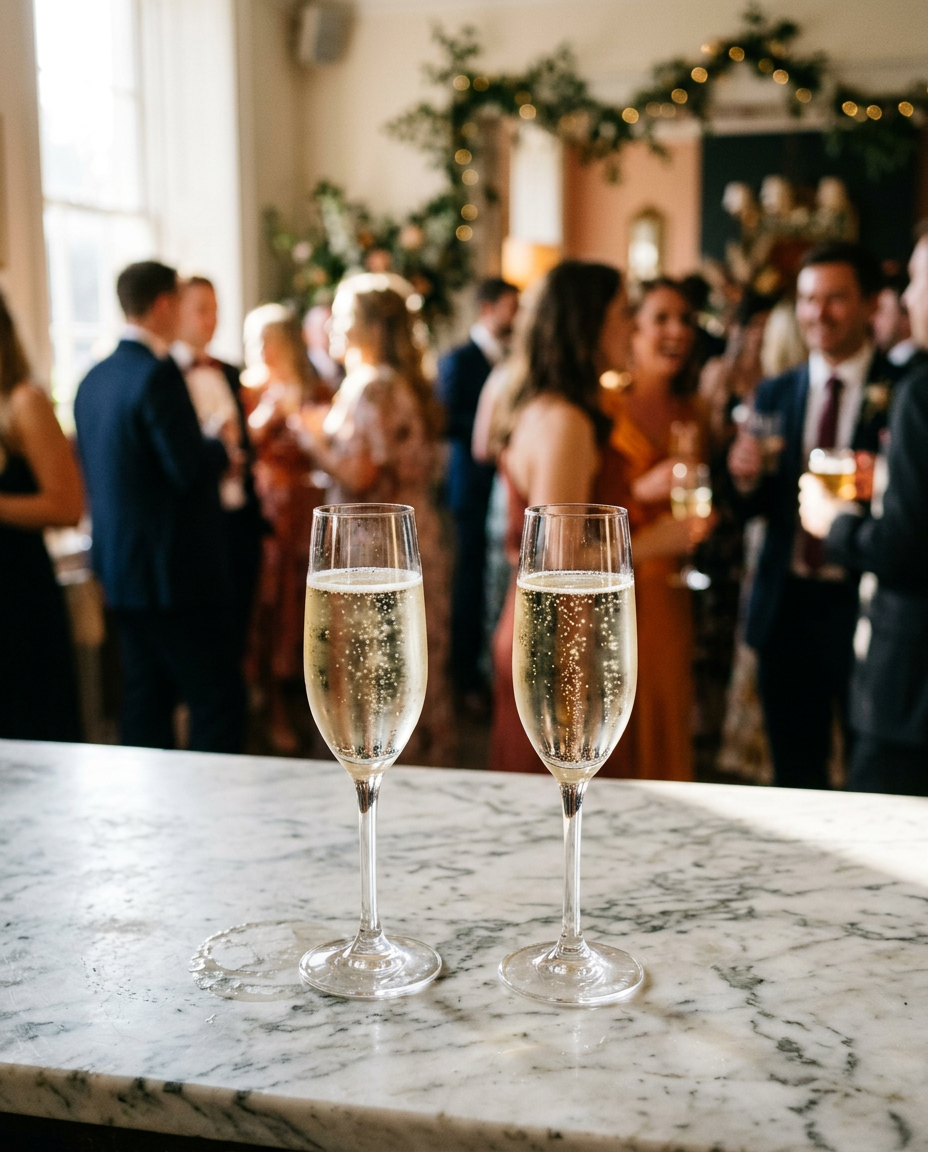
Cocktail hour is the most under-photographed segment of most weddings. The bride and groom are pulled into family portraits during that time and the candid coverage drops to one photographer covering 100 guests across an outdoor lawn or indoor space. The result: 40 minutes of irreplaceable guest interaction with sparse documentation.
What helps: a second shooter specifically tasked with cocktail-hour documentary work. Their entire 40-60 minute assignment is candid guest interactions, real laughs, glass-touching moments, the dog walking through, the older relatives reconnecting. Cost adds roughly $400-$900 to most photography packages and consistently produces the album section couples revisit most.
The wedding photo ideas worth requesting upfront
Photographers default to a standard shot list. The ideas below are the ones couples a year later say they wish they'd specifically requested. None of them are unusual; they just don't make it onto most standard shot lists by default.
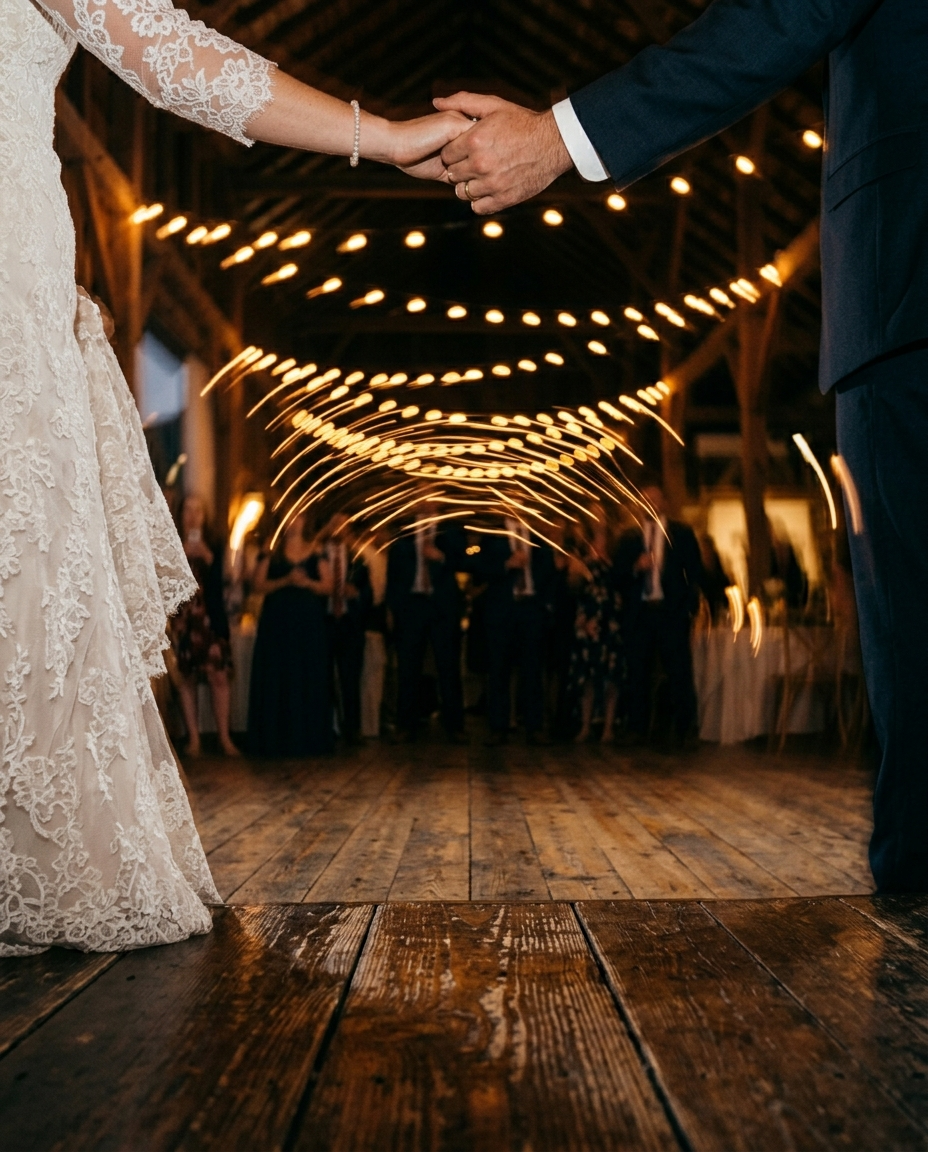
- Hands-only shot during the first dance — couple's clasped hands, no faces, just the movement and bistro lights
- Detail block early in getting-ready — dress on hanger, rings on pillow, bouquet on chair, perfume on vanity
- Grandparents' table during dinner — five minutes of candid documentary specifically there
- Guests' faces during the first toast — not the speaker, the audience reactions
- Empty venue at golden hour — the reception space staged but unpopulated, 10 minutes before guests enter
First-dance shots from low angles
Most first-dance photographs are taken at eye level, from 8-15 feet away, with the couple centered. The shots that consistently end up in wedding-photo print magazines are taken from significantly lower (the photographer crouched, sometimes lying on the floor) and closer (within 6 feet), capturing the couple's hands and the bistro lights overhead with intentional motion blur in the background.
Specifically request 'low-angle first-dance hand shots with motion blur' as part of your photography contract. Most photographers can shoot this style but default to the standard eye-level coverage unless asked. The shots produced add roughly 10-15 minutes to the timeline (the photographer needs to set up, reposition, and shoot multiple frames) and yield two or three album-anchor images.
Golden-hour portraits (the structural decision)
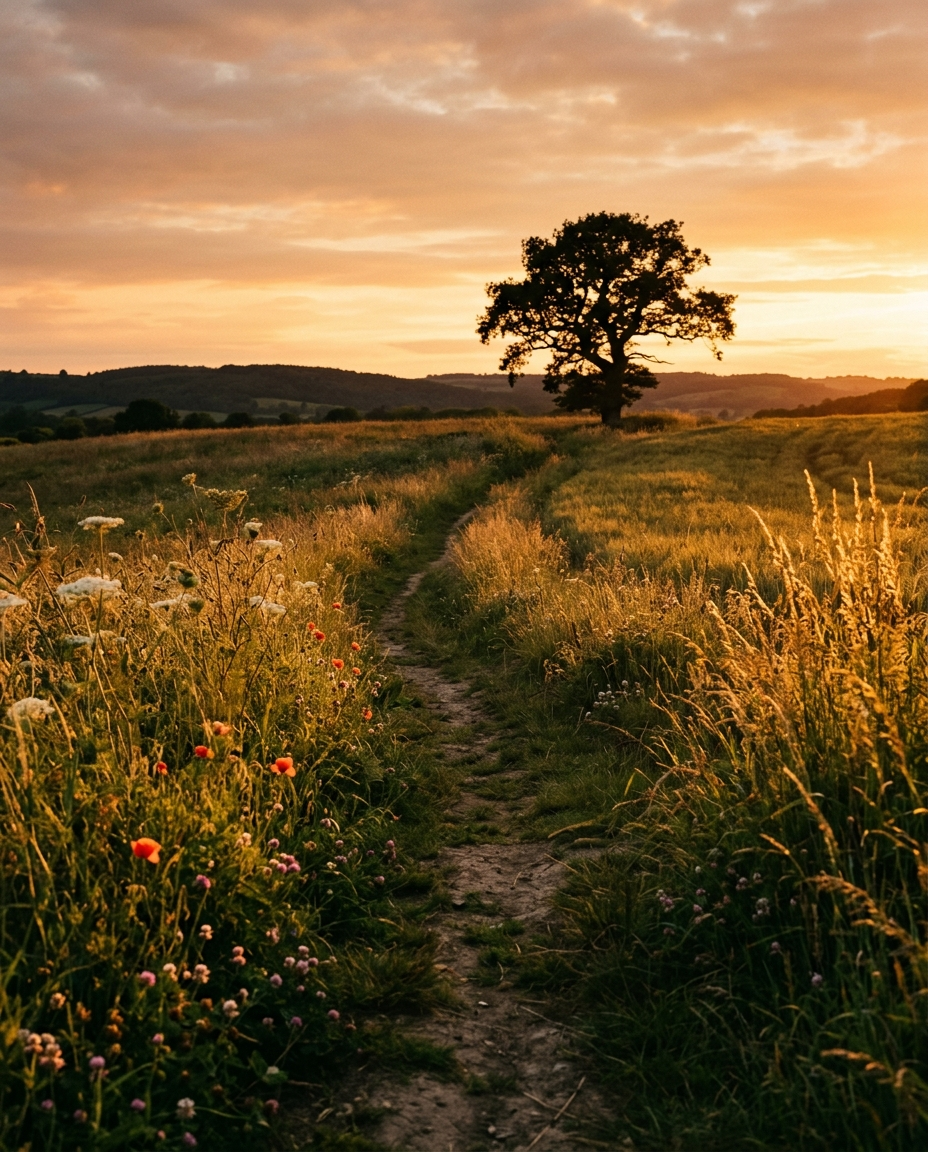
Golden hour is the 45-60 minutes before sunset when light becomes directional, warm, and dramatic. Wedding portraits shot during golden hour photograph at a different visual register than the same portraits shot 90 minutes earlier or later. The difference is the single largest structural quality decision in wedding photography.
The schedule consequence: your wedding day timeline needs to bake in 20-30 minutes of golden-hour portrait time for just the couple. This typically means slipping away from cocktail hour or pausing dinner service briefly. The couples we've audited who skipped golden-hour portraits to stay at cocktail hour overwhelmingly regret it; the couples who slipped away got the photographs that anchor their album. Plan for it from the start.
What we'd skip
The shoes-rings-bouquet flat lay shot with the dress in the background (became Pinterest cliché around 2016 and has aged badly). The wedding-party-jumping-in-the-air shot (always looks staged in retrospect). Any pose involving a chalkboard sign. The 'first look' shot styled to look candid but coordinated by the photographer (reads performed within five years).
Also worth skipping: shots that require unusual venue access (climbing on rooftops, posing on a road with cars blurred behind you, anything risky). The risk isn't worth the photo when the venue's natural backdrop is usually strong enough on its own.
FAQ
Frequently asked
How much should we budget for wedding photography in 2026?
Realistic ranges: $3,500-$5,500 for emerging photographers (1-3 years experience, single shooter, 6-hour coverage), $5,500-$9,000 for mid-tier (3-7 years, second shooter included, 8-10 hour coverage), $9,000-$18,000+ for top-tier wedding photographers in major U.S. metro markets. The biggest budget mistake we see is under-spending here; the photographs are the artifact you keep for 50 years and skimping on this line item consistently produces regret.
Should we share a shot list with our wedding photographer?
A focused shot list of 8-15 specific requests, yes. A 100-item Pinterest-board shot list, no. The longer the list, the more the photographer is checking boxes instead of capturing real moments. Send the 8-15 specific shots that matter (grandparents' table, the hands-only first dance, the detail block) and let them handle the rest with documentary judgment.
How do we get more candid wedding photos and fewer posed ones?
Hire a documentary photographer specifically, not a traditional one. The two camps shoot fundamentally differently. Documentary photographers shoot 2,000-4,000 frames across an event and edit down to 600-1,000 album shots; traditional photographers shoot fewer staged frames and rely on poses. Filter portfolios by the ratio of candid to posed shots, not just by photo quality. Junebug Weddings and Magnolia Rouge both have searchable photographer directories filtered by editorial-documentary style.